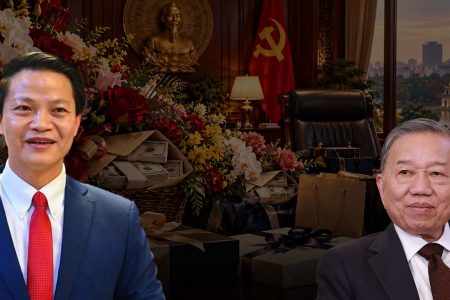
General Secretary Tô Lâm’s formal assumption of the state presidency in addition to his party post has prompted strong comparisons among international observers regarding a shift in Vietnam’s power structure.
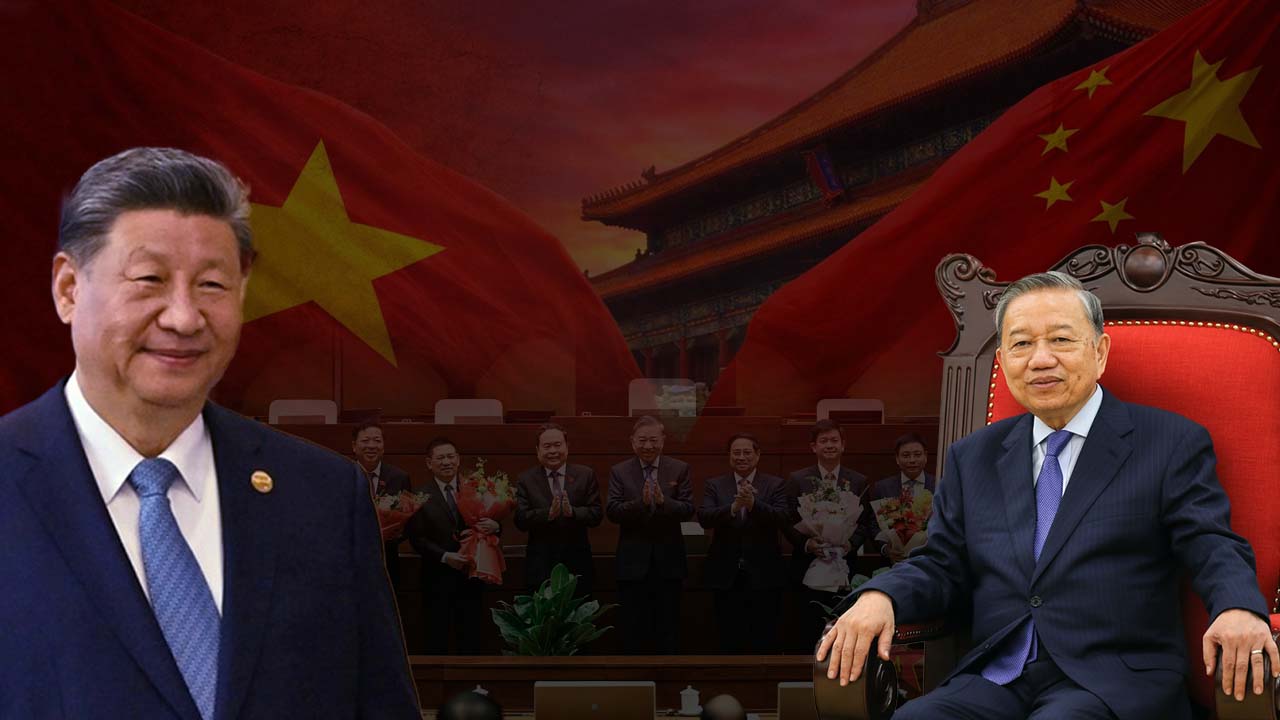
Many observers were quick to compare this arrangement with China’s political system, where Xi Jinping holds the highest concentration of power.
However, focusing only on the merging of titles while overlooking the internal checks within Vietnam’s political system can lead to a misunderstanding of its true political nature.
Professor Carl Thayer has recently pointed out that Vietnam is carrying out a distinctive delegation of power, but still within a framework of collective balance and control.
Accordingly, the fundamental difference lies in the constitutional foundation and term limits. In China, Xi Jinping successfully removed the barriers on time in office, paving the way for an era of lifelong leadership.
By contrast, in Vietnam, up to this point, there has been no sign that the Communist Party of Vietnam will amend the Party Charter or the Constitution to abolish term limits for the top leader.
According to experts, this creates a crucial legal guarantee that, even if Tô Lâm’s power becomes more concentrated, it still remains confined to a defined term.
Tô Lâm is operating within a system in which the Central Committee still plays an extremely powerful role, strong enough to serve as a “safety valve” to prevent abuses of personal power.
This is something that in China today appears to have “disappeared” after rounds of purges aimed at consolidating Xi Jinping’s absolute power.
In the language of political science, the term “authoritarian leader” may accurately describe Tô Lâm’s current position in Vietnamese politics.
However, despite holding the two highest offices, he is still a member of the Politburo and remains accountable to that collective body.
At the same time, the existence of what is called the “fifth pillar” — namely, the position of Permanent Member of the Secretariat — is also evidence that Vietnam’s political system still maintains a mechanism of power-sharing and oversight.
Moreover, while Xi Jinping is regarded as an authoritarian leader who has sought to eliminate almost all countervailing forces, Tô Lâm has instead chosen a strategy of coalition-building and seeking support within the Party.
International observers assess that, by Western standards, Tô Lâm is not building power in the manner of a dictator, but rather as a controlled authoritarian leader.
Yet this “authoritarianism” serves only to implement bold ideas aimed at dismantling the outdated system of collective leadership and replacing it with leadership by a single person bearing personal responsibility.
The support that Tô Lâm secured at the 14th Party Congress and the newly elected 16th National Assembly constitutes a highly legitimate mandate, derived from his ability to rally support and make decisive policy choices.
Vietnam under Tô Lâm may become stronger in foreign affairs and more decisive in domestic governance, but the mechanism of “collective leadership” has become an obstacle to a technocratic model of unified leadership and to the trend toward personal predominance.
In short, the difference between Vietnam’s “consolidation” and China’s lies in the fact that Vietnam’s political system still retains enough room for internal oversight and the counterbalancing mechanisms that have long existed.
And Tô Lâm now faces a crucial test: how to use this “consolidated” power to develop Vietnam without undermining the survival of the Communist Party of Vietnam.