Once known as the “leper village,” Vân Village was isolated for decades by disease, prejudice, and rugged terrain. Yet it was precisely this isolation that inadvertently preserved one of the most beautiful and pristine stretches of coastline in Da Nang. As this place gained more attention, its natural value suddenly became a “gold mine” in the eyes of investors.
Ironically, this once-forgotten land is now being courted with flashy promises of development and luxury resorts. But development for whom, and at what cost? Behind the flowery master plans lie concerns that ecosystems, landscapes, and public spaces are at risk of being squeezed out.
Residents hope for a brighter future, but they also wonder if nature is being sacrificed in the process. Van Village once overcame the stigma of its past to rediscover its inherent value. What is concerning is that today, the village faces another test: preserving its natural heritage or trading it away to join the controversial race for investment.
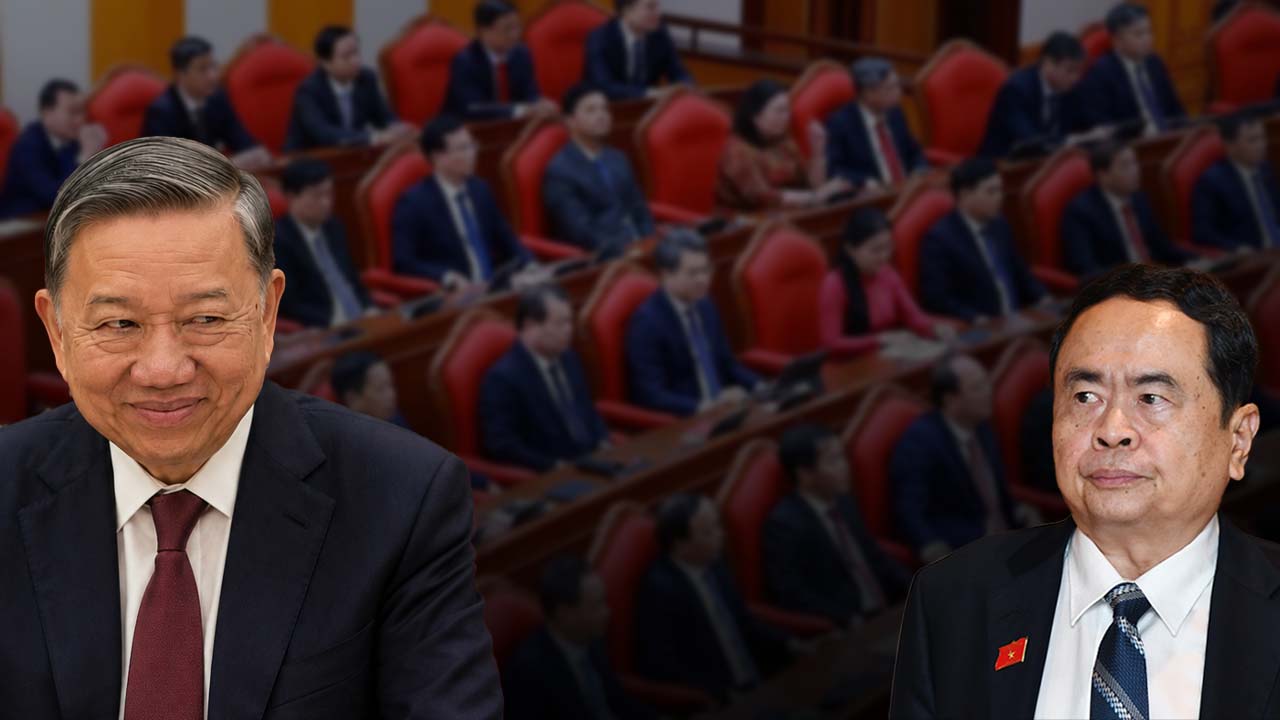
The rapid succession of changes in high-level personnel appointments following the 3rd Plenum of the 14th Central Committee is fueling widespread speculation among international political observers about a covert power shift at the highest levels of Ba Dinh.
The focus of attention is reportedly the Southwestern region, considered the strategic stronghold of National Assembly Chairman Tran Thanh Man and former Prime Minister Nguyen Tan Dung.
It is known that in September 2025, Mr. Do Thanh Binh left Can Tho for Hanoi to assume the leadership of the Ministry of Home Affairs, handing over the position of Municipal Party Secretary to National Assembly Secretary-General Le Quang Tung.
However, just over 300 days later, a surprise decision announced by Nguyen Duy Ngoc, Head of the Central Organization Commission, on the afternoon of July 25, 2026, completely reversed the situation.
Mr. Do Thanh Binh abruptly left the capital to return to his former position in Can Tho, while Mr. Le Quang Tung was reassigned to serve as Secretary of the An Giang Provincial Party Committee, a newly merged province formed from Kien Giang and An Giang.
According to well-informed sources, the fact that a minister in Le Minh Hung’s cabinet had to leave his post after only a short time and then return to his former locality cannot be viewed as a routine administrative reassignment.
Analysts note that the biggest question raised is whether this is a move to “cut off political ties” aimed at gradually stripping National Assembly Chairman Tran Thanh Man of his influence in this strategically important region controlled by To Lam.
Can Tho and the provinces of the Mekong Delta have long been the power base and a solid political springboard for Mr. Man. The reshuffling of key positions here may also be a calculated power purge orchestrated by Mr. Ba Dung.
As ministerial seats are revoked and strategic pawns are reshuffled at a dizzying pace, this also reflects the fierce behind-the-scenes competition, where no seat is truly safe under Mr. To Lam’s increasingly tight control.
Ngay sau khi Thứ trưởng Bộ Ngoại giao Việt Nam Phạm Thu Hằng đưa ra những phản ứng được cho là hết sức “cứng rắn”, khẳng định rằng các cáo buộc liên quan đến nhân quyền từ các tổ chức quốc tế là “sai lệch và không đáng để bình luận”.
Thì ngay lập tức, nền kinh tế Việt Nam phải hứng chịu một đòn giáng nặng nề. Văn phòng Đại diện Thương mại Hoa Kỳ chính thức đặt dấu chấm hết cho những hy vọng xoa dịu của Bộ Ngoại giao Việt Nam, khi áp đặt mức thuế bổ sung 12,5% đối với tất cả hàng hóa xuất xứ từ Việt Nam.
Biện pháp trừng phạt này không xuất hiện ngẫu nhiên, mà là hệ quả tất yếu của một chuỗi sai phạm hệ thống, khi Việt Nam liên tiếp bị 3 cuộc điều tra theo Mục 301 cùng lúc, bao gồm các vấn đề sở hữu trí tuệ, lao động cưỡng bức và dư thừa năng lực sản xuất.
Theo giới phân tích quốc tế, đây là một tiền lệ hiếm hoi đã đưa Việt Nam vào thế gọng kìm thương mại nguy hiểm vào hàng bậc nhất trên thế giới.
Theo đó, sự bất lực của hệ thống kiểm soát trong nước ở Việt Nam càng phơi bày rõ nét hơn qua những động thái mới nhất từ Cơ quan Điều tra an ninh nội địa Mỹ.
Cơ quan này đã trực tiếp “chỉ điểm” cho Công An Việt Nam về các cơ sở gia công lậu gần 50 ngàn đôi giày thể thao Nike, sử dụng nguồn nguyên liệu từ Trung Quốc để mượn đường xuất khẩu sang Mỹ dưới nhãn mác “hàng Việt Nam”.
Trước những bằng chứng tường tận từ phía cơ quan thực thi pháp luật Mỹ, những lời giải thích hay biện hộ của Bộ Ngoại giao Việt Nam hoàn toàn trở nên vô giá trị.
Trước đó, hàng loạt vụ việc vi phạm sở hữu trí tuệ đã liên tục bị bóc gỡ. Điều đó, càng cho thấy tình trạng “gian lận” để lẩn tránh xuất xứ đã trở thành một lỗ hổng trầm trọng mà các cơ quan quản lý Việt Nam cố tình phớt lờ trong một thời gian dài.
Nghiêm trọng hơn, là cuộc điều tra về lao động cưỡng bức, nơi Việt Nam nằm trong danh sách 60 nền kinh tế bị rà soát về năng lực ngăn chặn và kiểm soát nguồn gốc hàng hóa xuất sang Mỹ.
Kết quả là USTR kết luận Việt Nam không đáp ứng yêu cầu, qua đó phải gánh chịu mức thuế trừng phạt 12,5%, cao hơn cả một số quốc gia khác trong khu vực trong đó có Campuchia.
Song song với đó, cuộc điều tra về tình trạng dư thừa năng lực sản xuất cho các mặt hàng như: thép, nhôm, xi măng, pin năng lượng mặt trời và đồ điện tử đang tạo ra một sức ép chồng chéo hơn bao giờ hết.
Theo giới chuyên gia, khi các dòng thuế bổ sung này chồng lên nhau, khả năng cạnh tranh của hàng hóa Việt Nam tại thị trường xuất khẩu lớn nhất là Hoa Kỳ sẽ bị ảnh hưởng nghiêm trọng.
Các doanh nghiệp đầu tư nước ngoài, với những ngành hàng chủ lực trong xuất khẩu như điện tử, dệt may…, sẽ phải tính đến phương án dịch chuyển sang các quốc gia khác để bảo toàn lợi nhuận.
Từ đó, để lại cho nền kinh tế nội địa của Việt Nam đối mặt với nguy cơ đứt gãy dòng vốn hay đình trệ sản xuất đối với ngành hàng xuất khẩu là nguồn thu ngoại tệ trên diện rộng.
Vẫn theo giới chuyên gia, phản ứng “ngạo nghễ” của Thứ trưởngBộ Ngoại giao Việt Nam Phạm Thu Hằng trước những cú sốc mang tính sống còn này vẫn mang nặng bệnh thích ra oai và tư duy hình thức.
Thay vì tiến hành một cuộc cải tổ toàn diện, và minh bạch hóa cũng như siết chặt kỷ cương pháp lý, Hà Nội lại chọn cách trấn áp với mục tiêu tăng 20% số vụ việc, một con số thể hiện rõ bản năng đối phó hơn là giải pháp lâu dài.
Việc xem nhẹ luật chơi quốc tế trong thương mại toàn cầu, và chạy theo những con số thành tích bề nổi, đang buộc nền kinh tế Việt Nam phải trả giá bằng những đồng USD lợi nhuận của các doanh nghiệp.
Đòn thuế quan 12,5% từ Hoa Kỳ là hồi chuông cảnh tỉnh đanh thép nhất cho thấy cái giá phải trả của việc xem nhẹ luật chơi quốc tế thay vì dũng cảm đối mặt với sự thật của nhà cầm quyền Hà Nội.
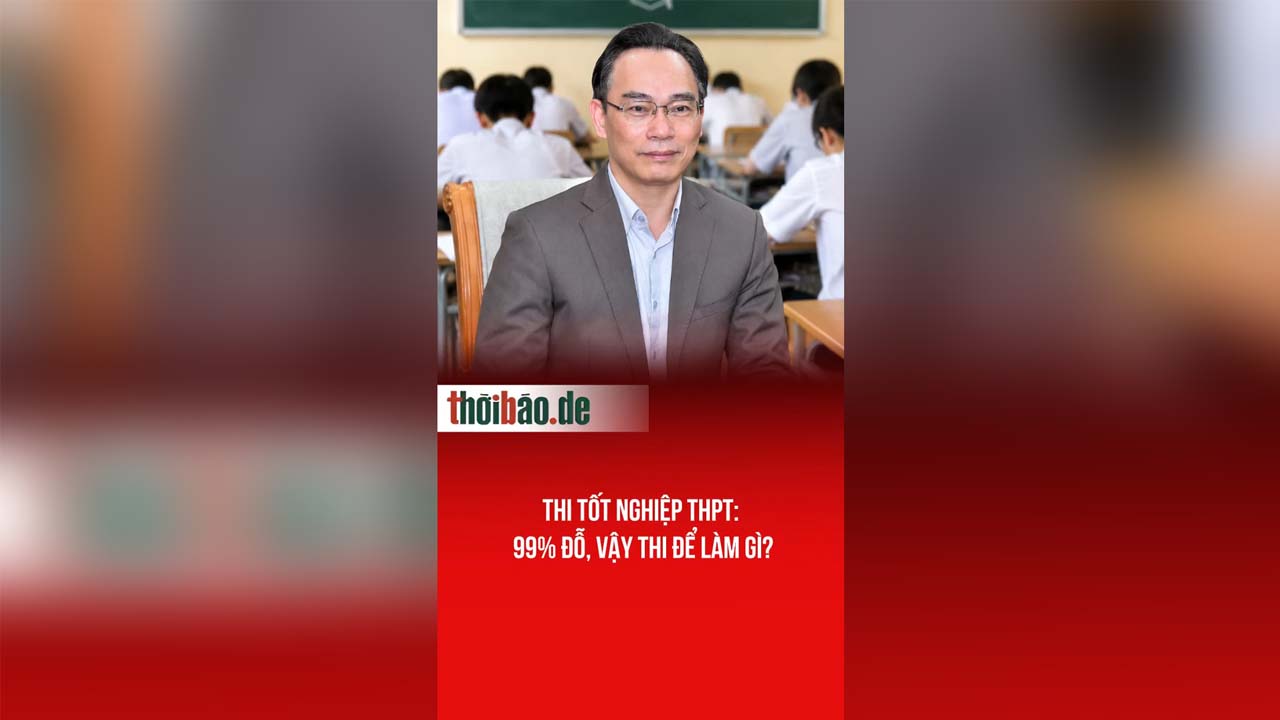
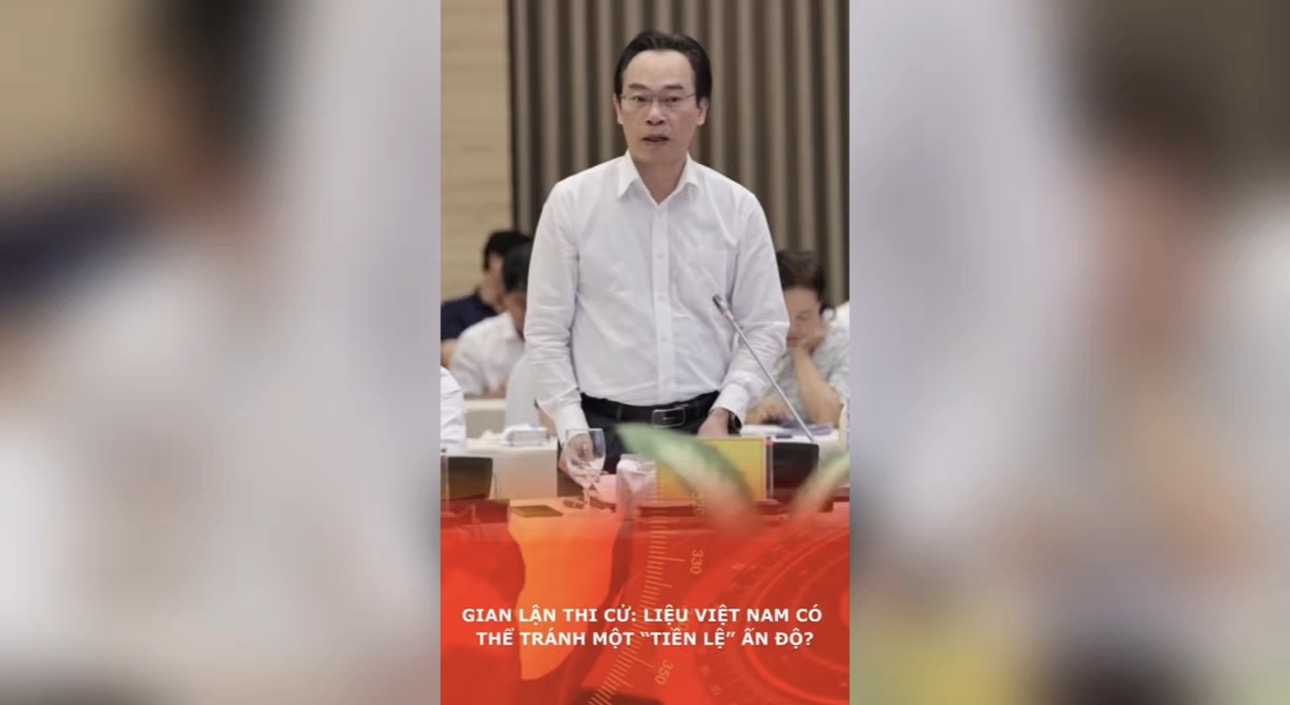
An exam in which more than 99% of test-takers pass. An exam referred to as a “measure of educational quality.” At first glance, one can’t help but laugh: if nearly everyone passes, is the exam really measuring quality—or is it just measuring… the ability to organize the exam? The Ministry of Education and Training cites three reasons for maintaining the exam: to motivate teaching and learning, to provide data for educational evaluation, and to assess the quality of graduates. The reasoning sounds very convincing. But the problem is that a test is only truly meaningful when the results reflect differences in ability.
If the pass rate consistently remains above 99%, does the exam truly help distinguish quality, or has it merely become a formality that students are almost certain to pass? More importantly, controversies over exam cheating and cases of unusual scores have made the issue of transparency more sensitive than ever. When trust is shaken, no matter how large-scale an exam may be, it will struggle to convince the public if people continue to question its fairness.
Perhaps what the Ministry of Education needs to do is not only explain why exams are necessary, but also demonstrate what real value they actually provide. Because if the goal is to assess quality, yet the results show that nearly everyone “passes,” the unavoidable question is: are we assessing students’ quality, or are we merely assessing whether they are capable of sitting in an exam room?
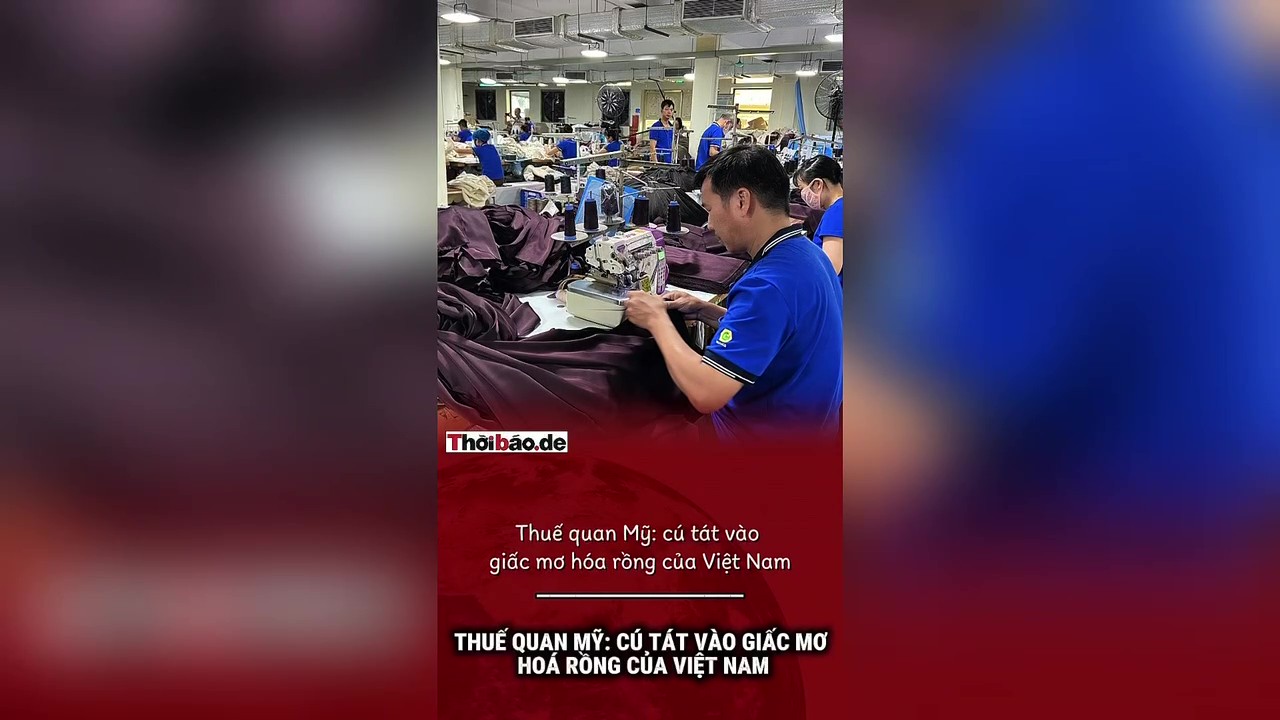
A 12.5% tariff from the U.S. may not be enough to bring Vietnam’s economy to its knees, but it’s enough to dispel the fog of rosy growth reports. Because when exported goods are hit with higher tariffs, the question immediately arises: Is Vietnam truly creating value, or is it merely positioned at the end of the supply chain to perform the final stage of production?
For many years, the “low-cost manufacturing hub” model was seen as Vietnam’s ticket to the global stage. Foreign companies arrived, factories sprang up, and export figures soared. Those numbers looked very impressive. But if most of the value lies elsewhere, while Vietnam primarily handles processing and assembly, how is that economy any different from a hired hand boasting about their boss’s revenue?
When tariffs change, that “illusion of prosperity” is immediately put to the test. At that point, Vietnam can no longer rely indefinitely on the advantages of cheap labor, cheap land, or preferential policies to compete. Perhaps it is time for policymakers to answer a difficult question: Does Vietnam want to become an economy that truly creates value, or will it simply continue to serve as the world’s assembly line while taking pride in its export figures?
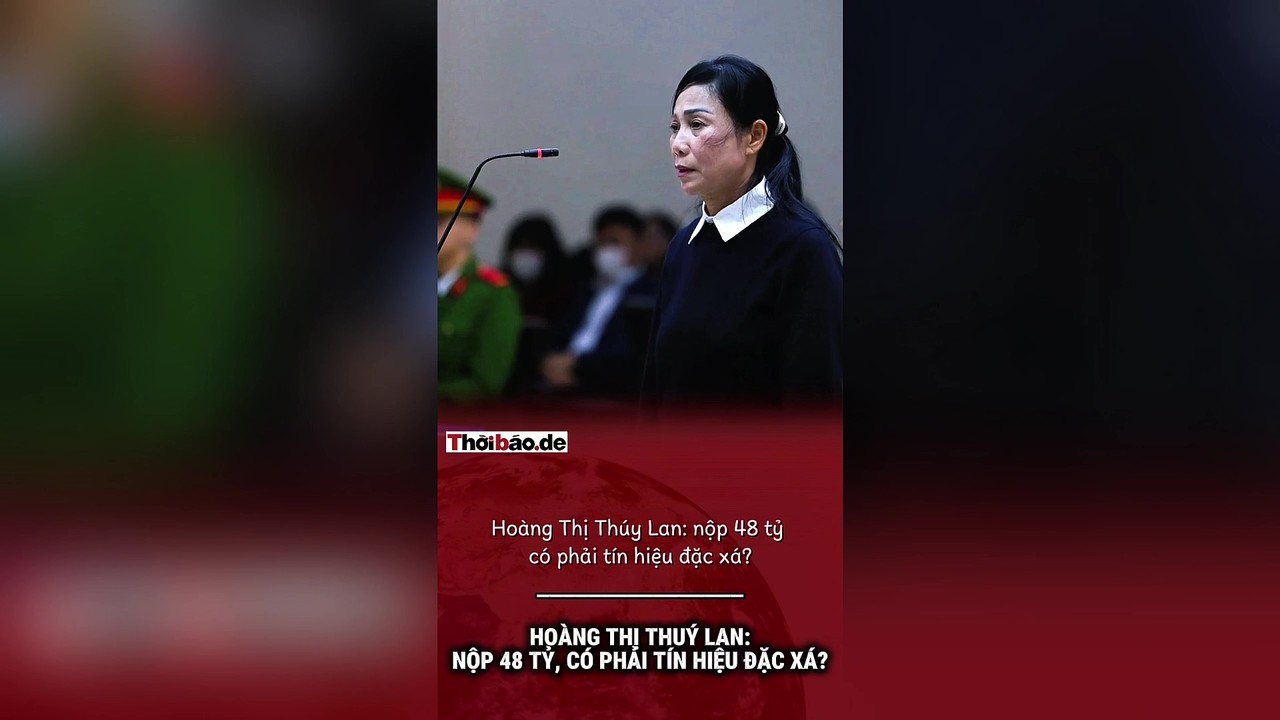
News that former Vinh Phuc Party Secretary Hoang Thi Thuy Lan has fulfilled her civil judgment obligations after paying nearly 48 billion dong and 200,000 dong in court fees immediately drew attention. What has captured public interest is not only the enormous sum but also the question: now that her financial obligations have been met, will the door to her return home open wider? In recent years, whenever a high-profile convict has fulfilled their civil obligations, the public has immediately raised questions about the possibility of a sentence reduction, early release, or a special pardon. Cases where inmates have had their sentences reduced and returned to their families only intensify that curiosity.
Of course, fulfilling civil obligations does not automatically guarantee a special pardon. All decisions must be based on legal provisions and specific conditions. But in the eyes of the public, such information still tends to create a familiar sense of anticipation: the fines have been paid, the obligations fulfilled—so how much longer until the day of return? And this is precisely the point. If the law has clear, transparent criteria, they should be made public so the people can understand. Because what the public needs is not speculation, but transparency.
And if one day Ms. Hoang Thi Thuy Lan is indeed granted a special pardon, the question will arise again: Was it a decision made in accordance with the law, or was it a “script” that public opinion had already anticipated?
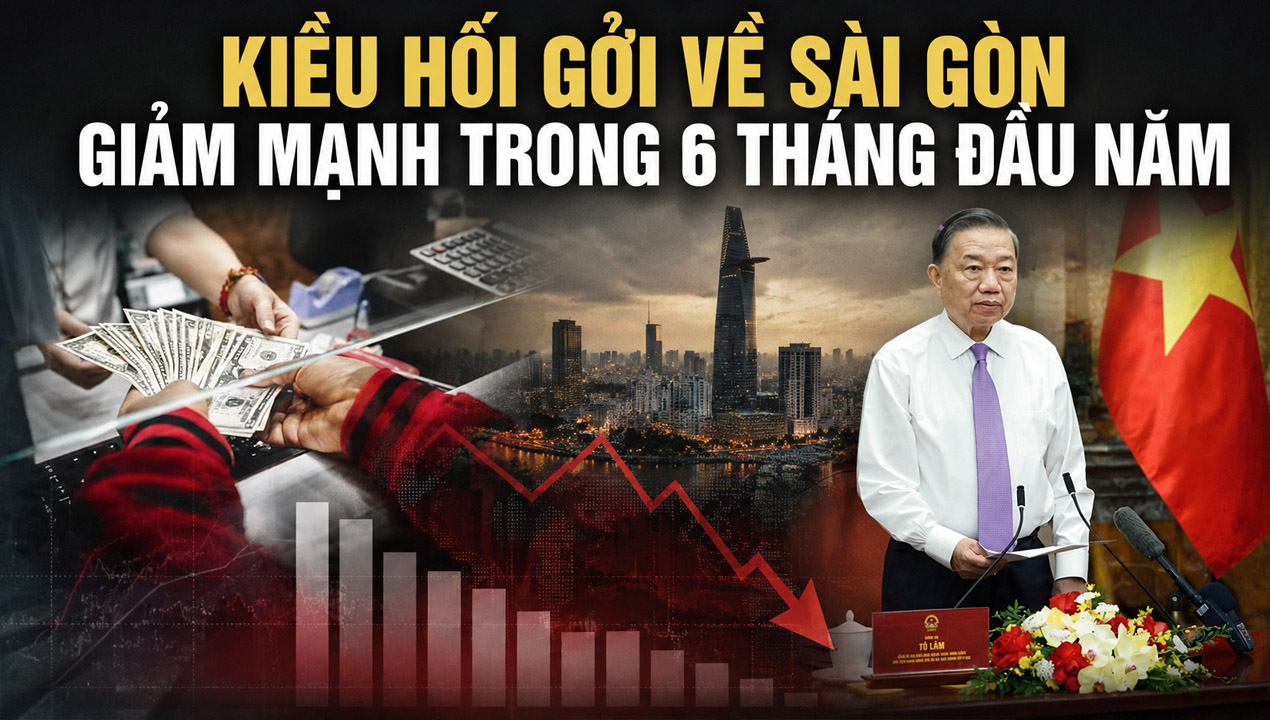
For many years, remittances have been seen as a quiet “lifeline” for Vietnam’s economy. Billions of dollars from Vietnamese living abroad flow back steadily, helping to support families, fund businesses, and provide a significant source of foreign currency for the country. However, if that flow of money is truly slowing down, this is not just a number on a report. It could be a signal that gives many people pause for thought.
After all, remittances don’t come out of thin air. Behind every U.S. dollar sent home lies the sweat and tears of Vietnamese people living and working abroad. They send money home because they still have families, a homeland, and faith. So if one day that flow of money were to drop sharply, the question we must ask is: Is it because of global economic difficulties, or because those sending money no longer see the need to send it home?
The government may present a series of impressive growth figures, but the trust of the people—especially those living abroad—cannot be measured by statistics alone. If remittances were once a steady stream flowing into Saigon, then a stream that is beginning to dry up is certainly worth taking a closer look at. Because behind the money that is no longer being sent home, there may be more than just economic hardship—there may be a bigger question: What is causing Vietnamese people living abroad to be increasingly reluctant to send their future back to their homeland?
A prize bearing the name “peace” was awarded in Moscow to a foreign leader. The media reported the news en masse, and congratulations poured in one after another. The occasion was so solemn that people almost forgot to ask: What, after all, does this prize really mean? It is noteworthy that the award was established amid Russia’s ongoing war in Ukraine—a protracted conflict that has caused casualties and forced millions to flee their homes. Yet, against this backdrop, a peace award was still presented.
And the honoree was To Lam, whose contributions to promoting peace and cooperation among nations were highly praised by the Russian side. Viewed through a satirical lens, this is indeed an intriguing paradox: one side presents the award, the other accepts it, and both stand under the spotlight of a title bearing the name “peace.” Outsiders can only wonder: is this a genuine recognition, or merely a beautifully packaged diplomatic gesture?
Perhaps “bamboo diplomacy” does bear fruit at times. The only thing is, when the flowers bloom in Moscow, one has to ask: does this award truly honor peace, or does it simply show that every country has its own unique way of defining those two words?
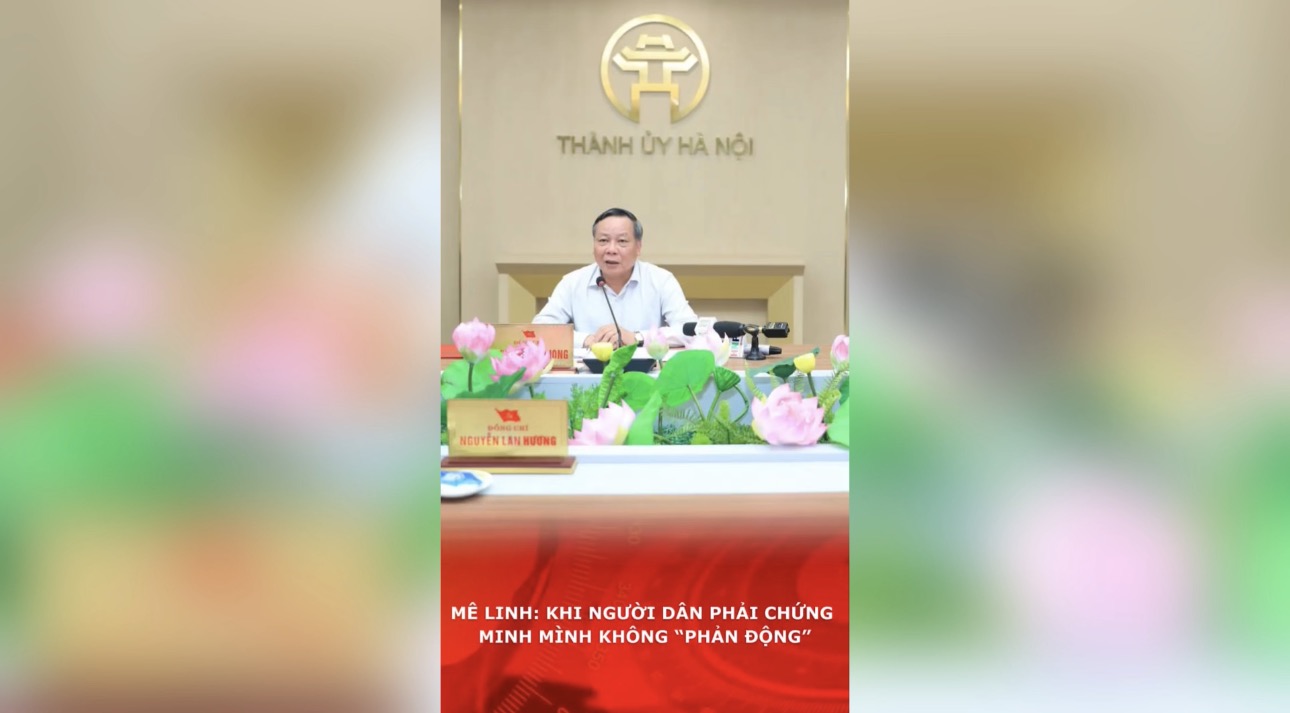
There is a thought-provoking image: residents of Tráng Việt, Mê Linh, Hanoi, wearing red shirts with a yellow star as they take to the streets to march. At first glance, some might call this a “success” of propaganda. But is that really the case? Or, on the contrary, is this a sign that residents are so anxious they feel compelled to prove they are not in opposition, not “reactionary,” but simply seeking to protect their legitimate rights?
Screenshot
A government that truly serves its people would not require citizens to wear any particular color to prove their patriotism before being heard. The people simply need to voice their aspirations; the government has the responsibility to engage in dialogue and resolve issues through the law. Because when people are both worried about losing their rights and afraid of being labeled, the issue is no longer merely a land dispute. It has become a matter of trust.
People should feel secure when dealing with the government. If they have to watch every word and every action, that is what we should be thinking about. So, don’t be too quick to view those red shirts with yellow stars as an “achievement.” The more important question is: Why do people have to wear them to feel safe when speaking out about their own rights?
Exams are generally considered the fairest measure of educational achievement. But if that yardstick is bent, what can students still trust? Controversies over cheating, leaked exam questions, and admissions irregularities in many places are raising an unavoidable question: if the hard work of millions of students can be nullified by dishonest acts, what meaning do all those sleepless nights studying and the money parents have painstakingly saved for their children’s education ultimately hold?
Screenshot
The most frightening thing is not just a rigged exam. What’s even more frightening is when the public loses faith that fairness still exists. A society where hardworking students without “connections” must take a back seat to those with money, power, or “protection” will end up weeding out its own talented individuals.
Therefore, what the public is waiting for is not empty promises of strict punishment, but tangible results. Those at fault must be held accountable. Violations must be thoroughly investigated. Penalties must be severe enough to deter anyone from turning exams into a power game. After all, a single case of cheating may be just one incident. But if trust is betrayed too many times, it can escalate into a much larger crisis. And the question worth pondering is: Will Vietnam learn its lesson before it’s too late, or will it wait until public outrage crosses the threshold?