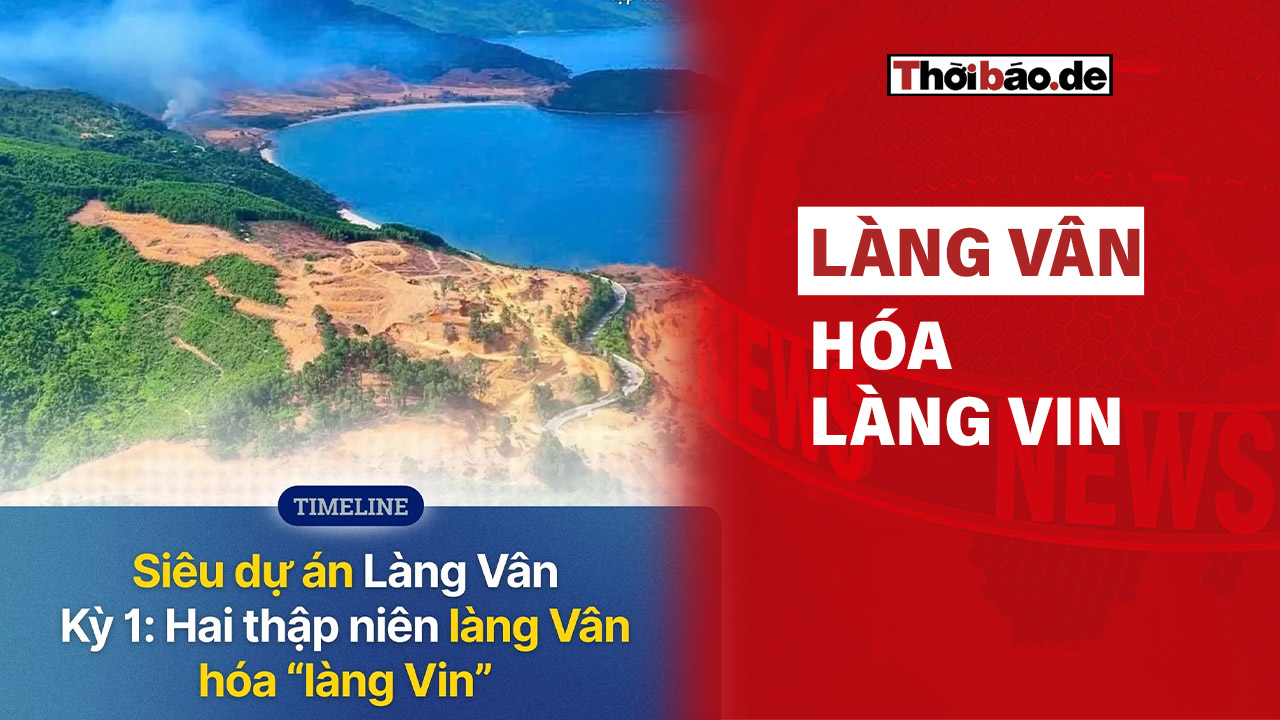
Từng bị gọi là “làng cùi”, làng Vân suốt nhiều thập niên bị cô lập bởi bệnh tật, định kiến và địa hình hiểm trở. Chính sự biệt lập ấy lại vô tình giữ nguyên một trong những dải bờ biển đẹp và hoang sơ bậc nhất Đà Nẵng. Khi nơi này được biết đến nhiều hơn, giá trị thiên nhiên bỗng trở thành “mỏ vàng” trong mắt các nhà đầu tư.
Thật trớ trêu, vùng đất từng bị lãng quên nay lại được săn đón bằng những lời hứa hào nhoáng về phát triển và nghỉ dưỡng đẳng cấp. Nhưng phát triển cho ai, và cái giá phải trả là gì? Đằng sau những bản quy hoạch đầy mỹ từ là nỗi lo về hệ sinh thái, cảnh quan và không gian công cộng có nguy cơ bị thu hẹp.
Người dân kỳ vọng một tương lai khởi sắc, nhưng cũng đặt câu hỏi liệu thiên nhiên có đang trở thành bên phải hy sinh. Làng Vân từng vượt qua sự kỳ thị của quá khứ để tìm lại giá trị vốn có. Điều đáng lo là hôm nay, nơi ấy lại đứng trước một phép thử khác: giữ gìn di sản thiên nhiên hay đánh đổi để chạy theo những cuộc đua đầu tư đầy tranh luận.
Ngay sau khi Thứ trưởng Bộ Ngoại giao Việt Nam Phạm Thu Hằng đưa ra những phản ứng được cho là hết sức “cứng rắn”, khẳng định rằng các cáo buộc liên quan đến nhân quyền từ các tổ chức quốc tế là “sai lệch và không đáng để bình luận”.
Thì ngay lập tức, nền kinh tế Việt Nam phải hứng chịu một đòn giáng nặng nề. Văn phòng Đại diện Thương mại Hoa Kỳ chính thức đặt dấu chấm hết cho những hy vọng xoa dịu của Bộ Ngoại giao Việt Nam, khi áp đặt mức thuế bổ sung 12,5% đối với tất cả hàng hóa xuất xứ từ Việt Nam.
Biện pháp trừng phạt này không xuất hiện ngẫu nhiên, mà là hệ quả tất yếu của một chuỗi sai phạm hệ thống, khi Việt Nam liên tiếp bị 3 cuộc điều tra theo Mục 301 cùng lúc, bao gồm các vấn đề sở hữu trí tuệ, lao động cưỡng bức và dư thừa năng lực sản xuất.
Theo giới phân tích quốc tế, đây là một tiền lệ hiếm hoi đã đưa Việt Nam vào thế gọng kìm thương mại nguy hiểm vào hàng bậc nhất trên thế giới.
Theo đó, sự bất lực của hệ thống kiểm soát trong nước ở Việt Nam càng phơi bày rõ nét hơn qua những động thái mới nhất từ Cơ quan Điều tra an ninh nội địa Mỹ.
Cơ quan này đã trực tiếp “chỉ điểm” cho Công An Việt Nam về các cơ sở gia công lậu gần 50 ngàn đôi giày thể thao Nike, sử dụng nguồn nguyên liệu từ Trung Quốc để mượn đường xuất khẩu sang Mỹ dưới nhãn mác “hàng Việt Nam”.
Trước những bằng chứng tường tận từ phía cơ quan thực thi pháp luật Mỹ, những lời giải thích hay biện hộ của Bộ Ngoại giao Việt Nam hoàn toàn trở nên vô giá trị.
Trước đó, hàng loạt vụ việc vi phạm sở hữu trí tuệ đã liên tục bị bóc gỡ. Điều đó, càng cho thấy tình trạng “gian lận” để lẩn tránh xuất xứ đã trở thành một lỗ hổng trầm trọng mà các cơ quan quản lý Việt Nam cố tình phớt lờ trong một thời gian dài.
Nghiêm trọng hơn, là cuộc điều tra về lao động cưỡng bức, nơi Việt Nam nằm trong danh sách 60 nền kinh tế bị rà soát về năng lực ngăn chặn và kiểm soát nguồn gốc hàng hóa xuất sang Mỹ.
Kết quả là USTR kết luận Việt Nam không đáp ứng yêu cầu, qua đó phải gánh chịu mức thuế trừng phạt 12,5%, cao hơn cả một số quốc gia khác trong khu vực trong đó có Campuchia.
Song song với đó, cuộc điều tra về tình trạng dư thừa năng lực sản xuất cho các mặt hàng như: thép, nhôm, xi măng, pin năng lượng mặt trời và đồ điện tử đang tạo ra một sức ép chồng chéo hơn bao giờ hết.
Theo giới chuyên gia, khi các dòng thuế bổ sung này chồng lên nhau, khả năng cạnh tranh của hàng hóa Việt Nam tại thị trường xuất khẩu lớn nhất là Hoa Kỳ sẽ bị ảnh hưởng nghiêm trọng.
Các doanh nghiệp đầu tư nước ngoài, với những ngành hàng chủ lực trong xuất khẩu như điện tử, dệt may…, sẽ phải tính đến phương án dịch chuyển sang các quốc gia khác để bảo toàn lợi nhuận.
Từ đó, để lại cho nền kinh tế nội địa của Việt Nam đối mặt với nguy cơ đứt gãy dòng vốn hay đình trệ sản xuất đối với ngành hàng xuất khẩu là nguồn thu ngoại tệ trên diện rộng.
Vẫn theo giới chuyên gia, phản ứng “ngạo nghễ” của Thứ trưởngBộ Ngoại giao Việt Nam Phạm Thu Hằng trước những cú sốc mang tính sống còn này vẫn mang nặng bệnh thích ra oai và tư duy hình thức.
Thay vì tiến hành một cuộc cải tổ toàn diện, và minh bạch hóa cũng như siết chặt kỷ cương pháp lý, Hà Nội lại chọn cách trấn áp với mục tiêu tăng 20% số vụ việc, một con số thể hiện rõ bản năng đối phó hơn là giải pháp lâu dài.
Việc xem nhẹ luật chơi quốc tế trong thương mại toàn cầu, và chạy theo những con số thành tích bề nổi, đang buộc nền kinh tế Việt Nam phải trả giá bằng những đồng USD lợi nhuận của các doanh nghiệp.
Đòn thuế quan 12,5% từ Hoa Kỳ là hồi chuông cảnh tỉnh đanh thép nhất cho thấy cái giá phải trả của việc xem nhẹ luật chơi quốc tế thay vì dũng cảm đối mặt với sự thật của nhà cầm quyền Hà Nội.
If a U.S. congressional delegation actually comes to Vietnam to investigate human rights, freedom of speech, and religious freedom, this will certainly not be a routine courtesy visit. The most sensitive questions are likely to be raised: What are detention conditions like? To what extent is freedom of expression guaranteed? And do those detained for social activism have fair access to the legal system?
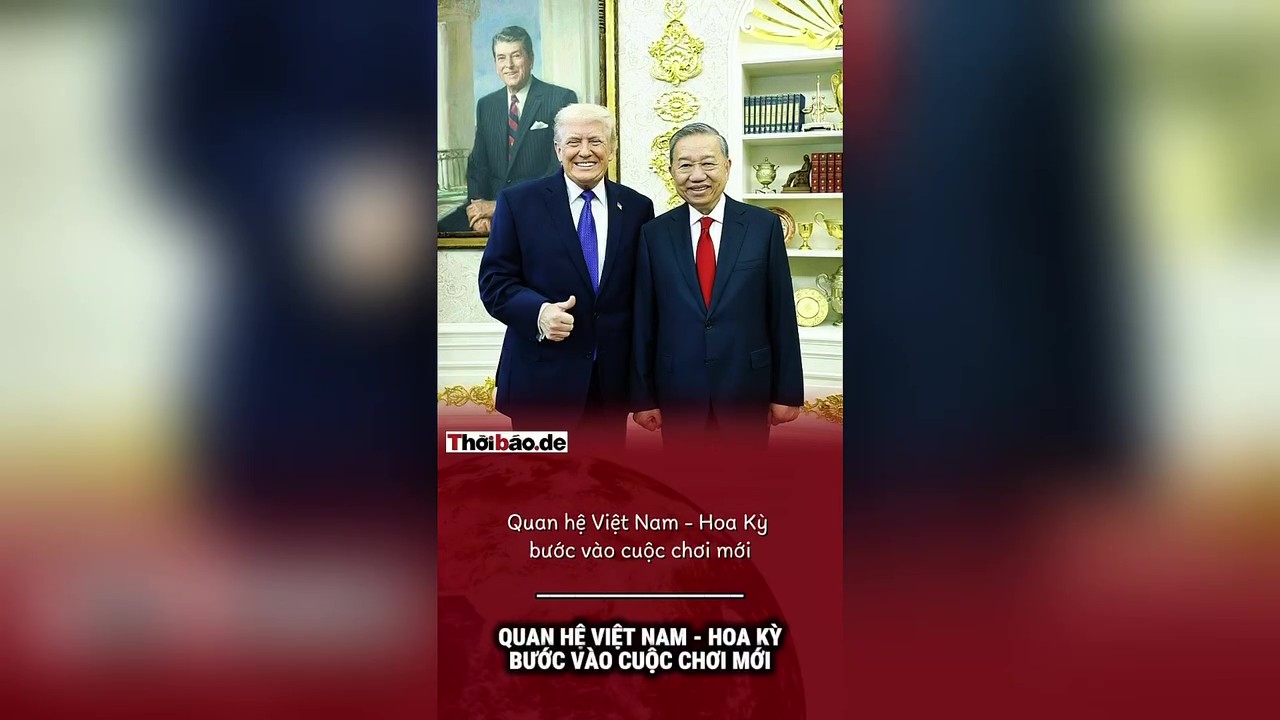
Vietnam-U.S. relations have been elevated to a Comprehensive Strategic Partnership, with trade and security ties growing ever closer. But one issue seems to always stand between the two sides: the human rights issue. Washington calls it a universal value; Hanoi has repeatedly emphasized the principles of respecting sovereignty and non-interference in internal affairs.
So if U.S. lawmakers wish to meet directly with those currently detained, the question arises: How far will Vietnam open the door to dialogue? Because in diplomacy, the more tightly a door is shut, the more curiosity it arouses about what lies behind it. A visit, if it takes place, may not immediately change the policies of either side. But it will demonstrate one thing: in a relationship that has been elevated to a strategic level, economic and security cooperation can progress very quickly, while disagreements over human rights remain an unavoidable test.
Behind the U.S.’s recent trade decisions regarding Vietnam may lie an unwelcome message: if the partnership is to go further, Washington wants Hanoi to demonstrate that Vietnam’s development is increasingly aligned with the standards the U.S. considers fundamental. Simply put, this is not just about goods, tariffs, or the trade balance. It’s also about the rules of the game.
For Vietnam, this is clearly no simple task. On one hand, there is the need to expand markets, attract investment, and maintain economic ties with a key partner. On the other hand, there are demands regarding standards, transparency, and the way the economy operates—aspects that Washington wants to see more clearly.
However, in international relations, no one gives anything away for free. When an economy wants to enter the big leagues, major partners will also set their own conditions. The question is how Vietnam will respond: will it adjust to adapt, negotiate to protect its interests, or continue to be caught between two choices? Ultimately, a “long-term partnership” isn’t built solely on flowery diplomatic rhetoric. It’s also measured by the ability of both sides to accept each other’s rules of the game. And this time, it seems Washington is reminding Hanoi: if you want to play along, prove that you’re truly ready.
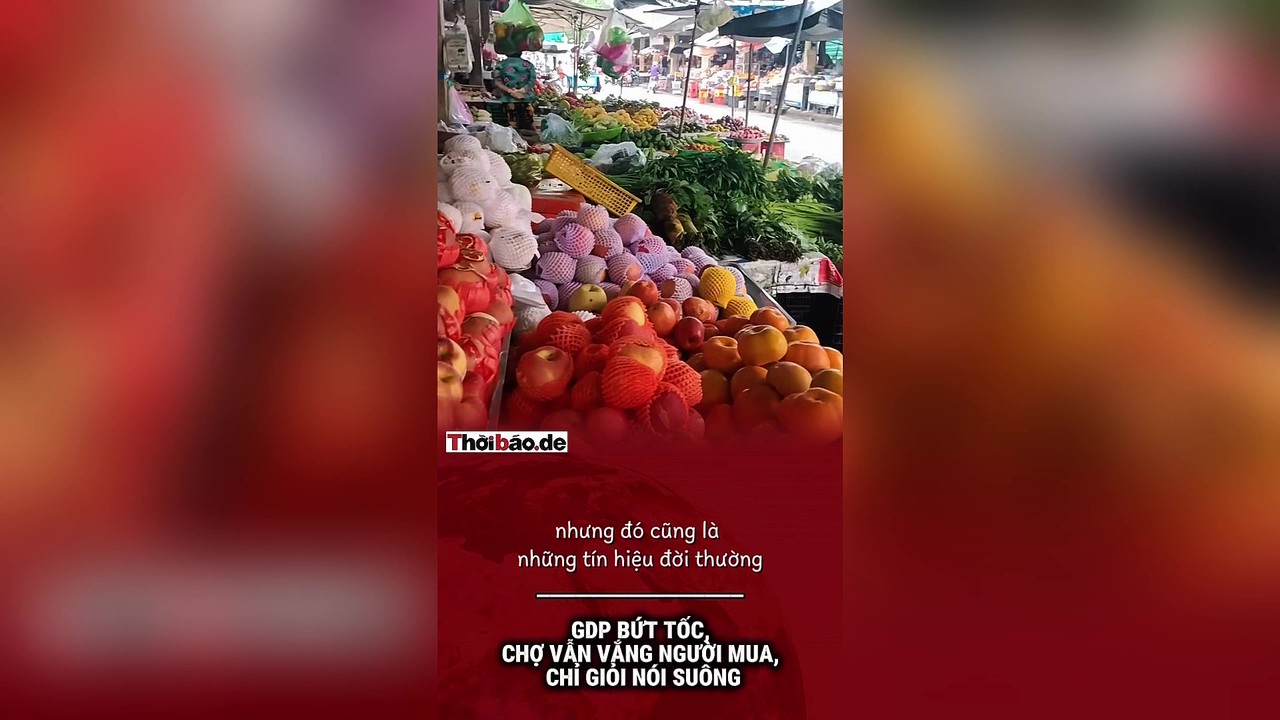
GDP growth is good news. But if the impressive numbers in the reports don’t translate into people’s daily meals, rent, and incomes, that joy remains a distant reality. A growth target of 10% or higher sounds ambitious, but stepping out onto the streets reveals no shortage of deserted markets, small vendors waiting impatiently for customers, closed shops, and storefronts with “For Lease” signs hanging. So where exactly is the economy “accelerating”?
Of course, a few quiet markets cannot represent the entire economy. But these are everyday signs worth paying attention to. While GDP is an important indicator, it is not the only measure of a nation’s health. A truly healthy economy must be felt through people’s purchasing power, employment, income, and the ability to maintain a stable livelihood.
If GDP is rising but vendors are still struggling to make sales, small businesses are still struggling to survive, and workers are still having to tighten their belts, then the question we should be asking isn’t “Is GDP growing?” but rather: To what extent are the fruits of this growth reaching people’s daily lives? After all, the economy isn’t a competition to see who has the best numbers; it’s about whether people are living better lives.
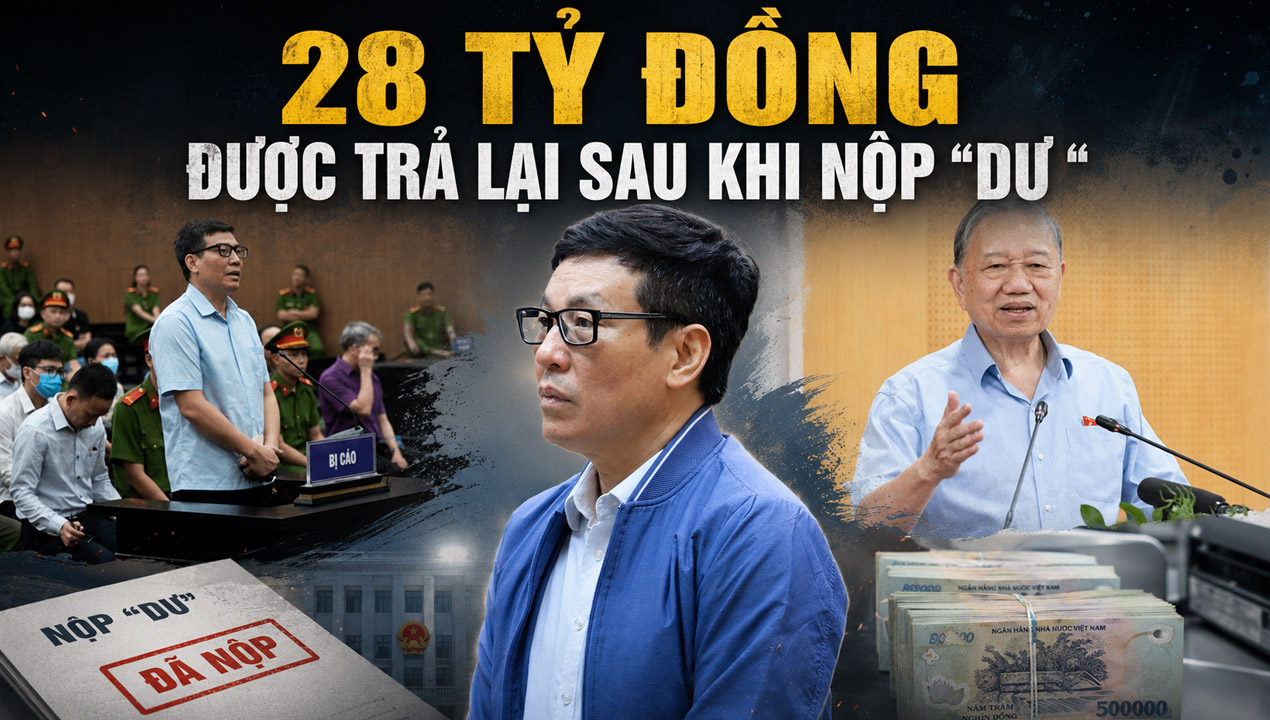
A story that has left the public stunned: the family of former Vinh Phuc Provincial People’s Committee Chairman Le Duy Thanh voluntarily paid over 1.63 million USD and more than 41 billion VND, but was later refunded 21.3 billion VND and 330,000 USD—a total equivalent to over 28 billion VND. The reason given was that the amount paid was “excessive.” At first glance, it sounds like a “mistaken transfer” on a trillion-dong scale: the money was deposited very quickly, but upon review, it turned out to be… too much!
But behind this irony lie more serious questions. Which funds were determined to be related to the case? Which funds were the family’s lawful property? On what basis did the authorities determine the amount to be returned? And most importantly, to what extent was the process of inventorying, seizing, safeguarding, and returning the assets conducted transparently?
The story might make people laugh because of the sheer “excess,” but behind the laughter lies a significant issue: assets related to a criminal case must be handled through the law, evidence, and transparency. Because if money can be “overpaid” by tens of billions and then returned, the public has the right to ask: ultimately, whose money is it, and why?
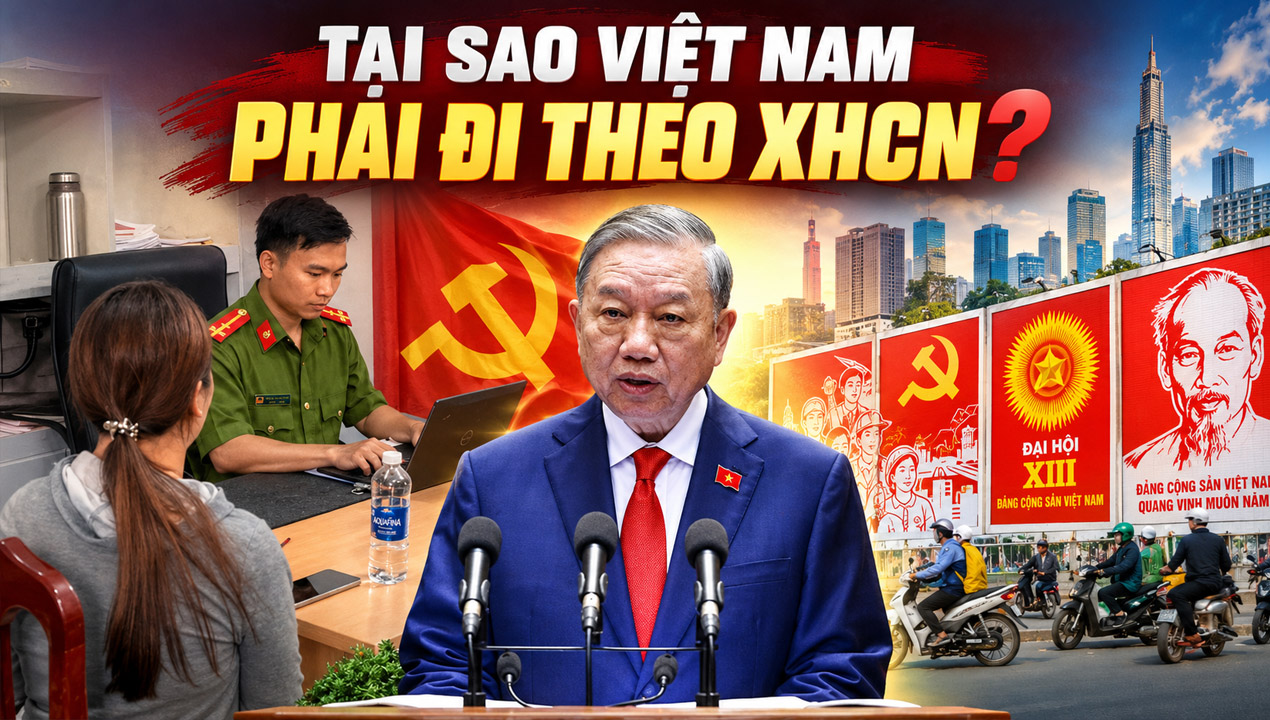
“Why does it have to be socialism?” — a question that seems simple but cuts right to the heart of the major debate over Vietnam’s path to development. After all, human history has never offered a single, definitive formula for achieving prosperity. Some countries choose one model, others choose another, and some continuously adjust to adapt to reality.
So perhaps the most important thing lies not in the name of a model, but in the final outcome: Are people living better lives? Are they protected by the law? Do they have opportunities to develop and contribute their opinions on the nation’s important issues?
No matter how appealing the name of a model may be, it cannot automatically create happiness. And no matter how often a slogan is repeated, it cannot replace the answers provided by real-life experiences. If the goal is a prosperous people, a strong nation, democracy, fairness, and civilization, then critical questions should not be viewed as a nuisance. On the contrary, it is precisely the ability to ask questions, engage in debate, and confront imperfections head-on that helps a society move forward. Because a strong nation is not one where no one is allowed to ask “why,” but one where people can ask and have the right to seek answers.
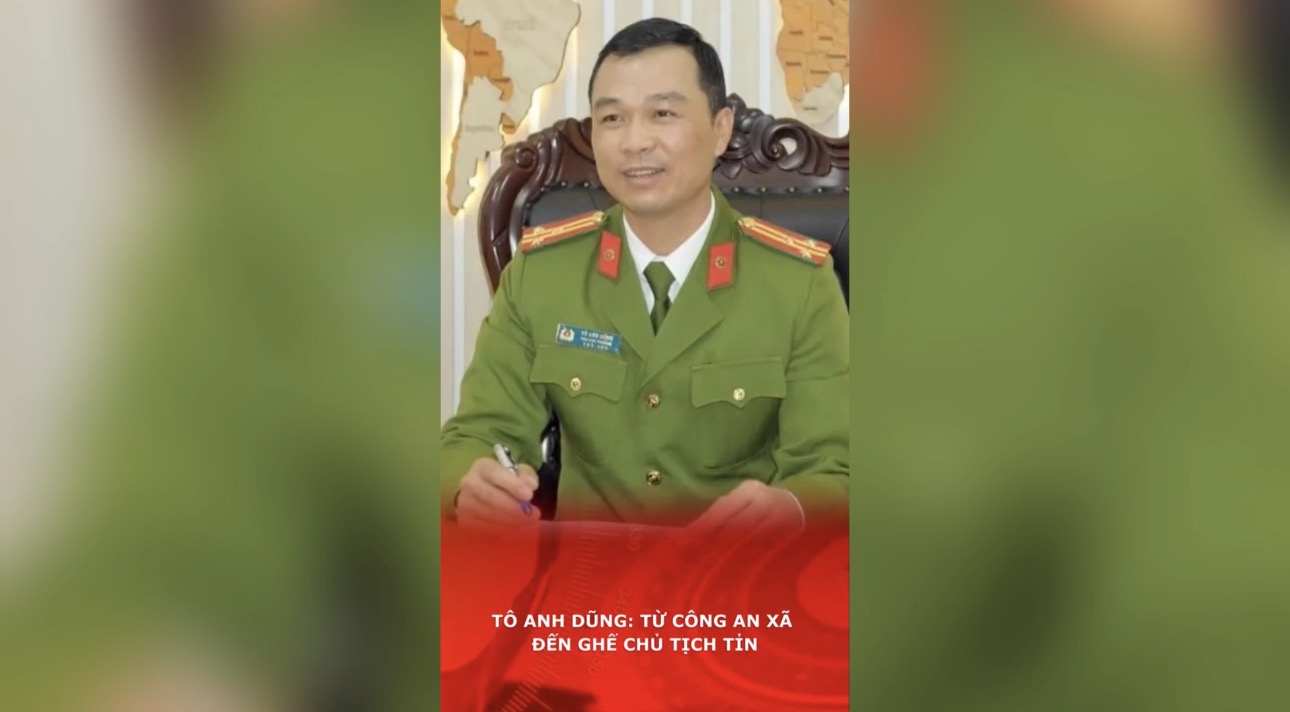
From an 18-year-old village police officer to a Major General, and then, at the age of 48, elected to serve as Chairman of the Thanh Hoa Provincial People’s Committee—Mr. To Anh Dung’s journey is certainly a remarkable story. On July 27, 2026, he officially assumed his new responsibilities after being approved by the Party Central Committee’s Secretariat to serve as Deputy Secretary of the Thanh Hóa Provincial Party Committee and nominated by the Provincial People’s Council to be elected as Chairman of the Provincial People’s Committee for the 2026–2031 term.
Screenshot
Three decades in the police force, a master’s degree in law, and a rapid rise through the ranks have created a background that has sparked public curiosity. Of course, in politics, being young does not necessarily mean a lack of experience, and a background in law enforcement is not unusual.
But when someone rises from a commune-level police officer to the rank of general and then takes the helm of a major province, questions about the criteria, competence, and mechanisms for selecting officials are inevitable. Congratulations to Mr. Dung on his new position. As for the people of Thanh Hoa, they will likely be more interested in a simple question: beyond his impressive titles, what will the new Provincial Chairman actually do for the local community?
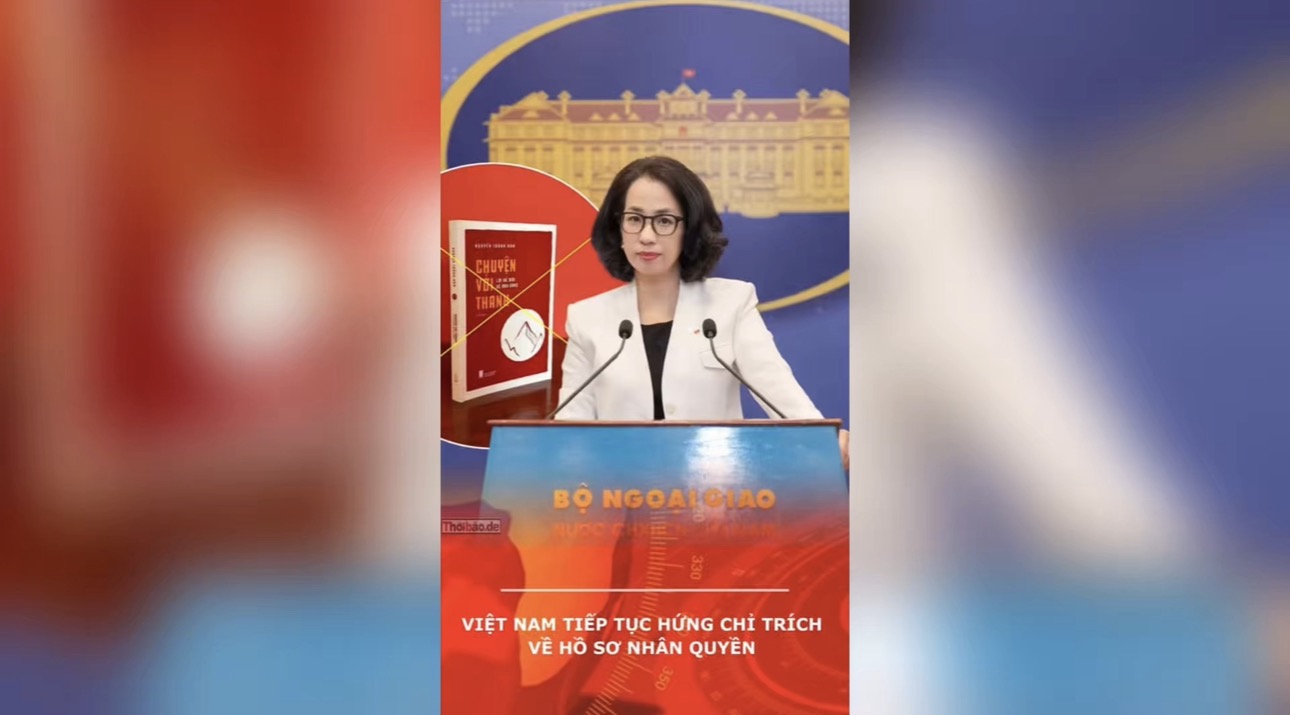
The debate over human rights has heated up once again as Human Rights Watch (HRW) rejected the claim that the organization exploits human rights issues to interfere with national sovereignty. In response to an assessment raised in an analysis by the People’s Police Daily, Ms. Elaine Pearson affirmed that HRW does not issue orders to any government nor interfere in judicial processes, but merely offers recommendations based on international human rights law standards.
Screenshot
Specifically regarding the “Chuyện với Thanh” case, HRW continues to urge the Vietnamese government to drop the charges and release the five individuals involved. This statement immediately sparked conflicting viewpoints: some see it as a voice of human rights oversight, while others argue that international recommendations may encroach on matters within national jurisdiction.
As the debate intensifies, the question is not only who is right and who is wrong, but also how to reconcile international human rights commitments with the principle of respecting each nation’s sovereignty.
Under the guise of “accelerating progress” and “putting land into use sooner,” a new proposal is sparking heated debate: allowing land to be expropriated before compensation, support, and resettlement plans are finalized. If approved, residents may be required to surrender their land while their rights have not yet been fully determined.
This is all the more concerning as the draft also aims to eliminate certain provisions regarding procedures and processes and does not establish strict regulations for the land acquisition process. These changes are justified as a means to resolve bottlenecks for specific projects, but they also raise questions about the mechanisms to ensure the legal rights and interests of those whose land is being acquired.
These procedures were originally designed to ensure transparency and minimize disputes. As legal safeguards are relaxed, public concern extends not only to the speed of project implementation but also to the mechanisms that will protect citizens’ property rights. Development is necessary, but it is only sustainable when accompanied by transparency, fairness, and public trust.