Link Video: https://youtu.be/OQ_EfE9-KWc

Nhiều tháng chống dịch COVID-19, đặc biệt từ ngày 27/4 khi đợt dịch thứ tư bùng phát và đang diễn biến “hết sức phức tạp” ở các tỉnh miền Nam, cho thấy nhiều vấn đề về chính sách và thực thi chính sách ở cấp trung ương cũng như địa phương.

Chính quyền địa phương cấp tỉnh đã mất kiểm soát, Trung ương buộc phải nắm quyền điều hành là những gì đang diễn ra và cần phải điều chỉnh, hướng đến một chiến lược thích nghi bền vững hơn.

Tình hình dịch bệnh COVID-19 đã vượt tầm kiểm soát của chính quyền địa phương ở Thành phố Hồ Chí Minh, lan rộng dữ dội sang Bình Dương, Đồng Nai và các tỉnh xung quanh, đặc biệt là vùng đồng bằng Sông Cửu Long.

Theo số liệu báo cáo chính thức từ cơ quan y tế, chỉ trong vòng bốn tháng trở lại đây, hơn 13.000 người thiệt mạng vì đại dịch này, đa số ở Thành phố Hồ Chí Minh và các tỉnh lân cận.

Số ca nhiễm mới của cả nước chỉ trong bốn tháng qua là hơn 500.000 người, chủ yếu ở tâm dịch.

Mấy tuần gần đây số ca nhiễm trung bình hàng ngày ở mức trên 10 ngàn người và tỷ lệ tử vong cao hơn mức trung bình thế giới và khu vực…

Giới chuyên môn nhận định rằng hiện thời chưa đến đỉnh dịch….

Tình hình dịch COVID-19 ‘dữ dội’ như trên không thể chỉ đổ lỗi cho biến chủng Delta nguy hiểm, dễ lây lan, thời gian ủ bệnh ngắn, không triệu chứng rõ rệt, trở nặng nhanh… mà còn do cách phòng và chống của con người.

Cả nước đã trải qua hơn một năm thử thách của ba đợt dịch tính từ đầu năm 2020.

Chính sách và triển khai thực hiện được đánh giá là hiệu quả với chi phí thấp.

Các chỉ thị 15, 16 và 19 đã được ban hành kịp thời theo hướng “nới lỏng dần” tuỳ thuộc vào mức độ nguy hiểm về các nội dung chính như về tập trung đông người, về khoảng cách an toàn tối thiểu đối với người dân và về các điều kiện hoạt động đối với các cơ sở kinh doanh có liên quan như cửa hàng buôn bán, nhà hàng, vũ trường, quán karaoke…, trong đó biểu tượng 5K dễ nhớ, dễ áp dụng cho mọi người.

Ảnh: cảnh giao thông chen chúc ở Hà nội. Về việc áp dụng giấy phép đi đường ở Hà nội, Nguyễn Xuân Diện cho biết: “chỉ trong 40 ngày, Hà Nội có 4 lần thay đổi quy trình. Trung bình “tuổi thọ” của giấy không quá 10 ngày.”

Kinh nghiệm phòng chống dịch ở các địa phương miền Bắc (Hà Nội, Hải Dương, Bắc Giang, Bắc Ninh), miền Trung (Đà Nẵng, Quảng Nam) được cho là thành công với cách tiếp cận phát hiện, truy vết và cách ly tập trung các ca bệnh (F0) và người tiếp xúc gần có nguy cơ (F1).

Một đoạn video được TV phát cho thấy, dịch bùng phát tại Chí Linh, Hải Dương đúng vào dịp Đại hội 13 đầu năm 2021 nhưng các lãnh đạo – đại biểu vẫn “ung dung” dự họp xong mới trở về địa phương để chỉ đạo.

Bệnh chủ quan, việc áp dụng theo “quán tính” các bài học kinh nghiệm trên, mà không lường hết được sự phức tạp về nhân khẩu học và xã hội của Thành phố Hồ Chí Minh – trung tâm kinh tế với khoảng 10 triệu dân thường trú, số lao động, học tập…  có thể là một nguyên nhân của tình hình dịch bệnh ngày càng căng thẳng, tính từ thời điểm giãn cách xã hội 0 giờ ngày 31/5/2021 đến nay đang là nỗi ám ảnh.

Số ca nhiễm bệnh và tử vong không thuyên giảm, sự quá tải về y tế, rối loạn nguồn cung và an sinh, đình trệ sản xuất, nỗi khổ, các bức xúc xã hội và người dân…. đang thử thách sức chịu đựng của người dân và chính quyền trước mắt và lo lắng về tương lai.

Chính quyền Trung ương đã “giành quyền” chỉ đạo các hoạt động chống dịch tại Thành phố Hồ Chí Minh và các tỉnh lân cận, đã tạo sức ép đối với các lãnh đạo địa phương.

Một loạt động thái mạnh được ban hành tức thì: Quốc hội nhanh chóng trao quyền lớn hơn cho Chính phủ;

Sự thay đổi nhân sự có liên quan như việc điều động ông Chủ tịch Thành phố Hồ Chí Minh ra Trung ương, chỉ định Trưởng Ban phòng chống dịch trung ương là Thủ tướng Chính phủ;

Các tổ công tác đặc biệt nhanh chóng được thiết lập về chuyên môn y tế, cứu trợ…, kể cả về ngoại giao vắc-xin;

Thành lập các tổ y tế lưu động; Tăng cường xét nghiệm diện rộng, ưu tiên phân bổ và thúc đẩy tiêm chủng vắc-xin;

Điều động nguồn lực và nhân lực y tế cả nước hỗ trợ vùng dịch; Điều động quân đội tham gia chống dịch…

Ảnh: một người dân đang len qua lớp rào chắn dày đặc ở ngõ Phất Lộc, Hà nội

Ông Thủ tướng từng bức xúc: “Địa phương không đẩy lùi dịch bệnh phải kiểm điểm”’.

Ưu thế của chế độ tập quyền trong tình huống cấp bách được phát huy và hệ thống chính trị được “kích hoạt” theo các nguyên tắc “thời chiến”: Huy động mọi nguồn lực và nhân lực chống dịch;

Tạo sức ép tối đa lên chính quyền địa phương từ cấp tỉnh đến cơ sở, quy định thời hạn chót gỡ bỏ phong toả;

Tổ chức, phối hợp, liên kết và hướng dẫn các bộ phận tác nghiệp và các nhân viên thực thi theo yêu cầu công việc và theo Luật;

Kiểm soát và định hướng hoạt động mới…

Tuy nhiên, tình hình thực bệnh đang là phép thử lớn nhất đối với năng lực cán bộ lãnh đạo.

Sự yếu kém bộc lộ cả “trên và dưới”, cả “tả và hữu”.

Một số lãnh đạo địa phương “thừa quyết liệt” để thực thi những biện pháp giãn cách nghiêm ngặt: “ai ở đâu ở yên đó” bằng cách ban hành quy định riêng, các loại giấy phép con để ra đường, thậm chí chốt chặn ‘giây thép gai’…

Trong khi còn có những cán bộ cơ sở phường xã thiếu trách nhiệm, vô cảm, không có kế hoạch, phương án phòng chống dịch mặc dù đây là những địa bàn nóng bùng phát dịch.

Truyền thông đã phản ánh điều trên khi đưa tin về các chuyến thị sát “đột xuất” của người đứng đầu Chính phủ.

Ông Thủ tướng đã nhấn mạnh rằng cần coi chính quyền cơ sở cấp phường, xã là “pháo đài” phòng chống dịch và kỳ vọng tạo “cú hích” cho các biện pháp hành chính mạnh.

Đây là nguyên tắc quản lý tập trung, theo đó cấp chính quyền cơ sở, là nơi thực hiện mọi chính sách từ trung ương.

Tuy nhiên, đối với loại chính sách phòng chống dịch COVID-19 thì cấp phường xã không chỉ để quản lý hay phục vụ đúng đối tượng cần thiết chữa trị, cứu trợ, mà hơn thế cần nắm bắt và phản ánh những gì mà người dân không hài lòng và cách khắc phục.

Các phân tích đã chỉ ra chính sách cứng rắn nhằm tiêu diệt hoàn toàn COVID-19 đã không còn phù hợp.

Bởi vậy, cần cách tiếp cận thích nghi hơn, vừa chống dịch vừa đáp ứng nhu cầu sống tự nhiên của con người, đặc biệt trong điều kiện đại dịch có thể còn kéo dài không chỉ làm cạn kiệt nguồn lực, quá tải y tế mà còn làm tổn hại sức khoẻ tinh thần của người dân.

Chiến lược thích nghi lâu dài cho phép vượt qua nỗi ám ảnh bởi những con số ca nhiễm bệnh và tử vong hàng ngày và tránh được những biện pháp hành chính cực đoan.

Mục đích cuối cùng, đối tượng thực sự của chính sách phòng chống dịch là nhu cầu sống bình thường của người dân chứ không chỉ là vấn đề dịch tễ.

Đã có những phản hồi trước tình hình phong toả nghiêm ngặt kéo dài rằng sức chịu đựng của người dân và xã hội là “có hạn”, và cần thiết phải điều chỉnh chính sách.

Ông Bí thư Thành uỷ Nguyễn Văn Nên: “TP.HCM không thể áp dụng Chỉ thị 16 mãi được”.

Ông Thủ tướng CP hôm 29/8 đã nói trong một cuộc họp về phòng chống dịch rằng Việt Nam xác định “phải chung sống với dịch bệnh, không thể khống chế tuyệt đối”….

Thực ra, một số điều chỉnh đã và đang diễn ra như thực hiện việc cách ly F0 (ca nhiễm bệnh nhẹ) và F1 (người có nguy cơ cao) ở nhà; quy định các vùng “đỏ”, “cam” và “xanh” cảnh báo theo mức độ nguy cơ để áp dụng các biện pháp giãn cách phù hợp; cho phép người giao hàng công nghệ (shipper) được hoạt động….

Đó là tín hiệu bước đầu để hình thành chiến lược thích nghi phòng chống dịch lâu dài trên diện rộng, trong đó đồng thời với chiến lược vắc-xin tích cực, các kịch bản để tiến tới “sống chung với dịch COVID-19” cần được cụ thể hoá theo đặc thù địa phương và cấp độ rủi ro lây nhiễm.

Ảnh: 70% doanh nghiệp ở TpHCM và Bình dương đã đóng cửa, chuỗi cung ứng đứt gãy khiến cho thấy nền kinh tế cả nước gần như dừng lại

Trong điều kiện bình thường đa số người dân chỉ ‘lo toan’ về đời sống, thu nhập của chính họ, mà ‘không cần biết’ rằng chính quyền của họ vận động ra sao.

Tuy nhiên, sức chịu đựng của họ đã “tới hạn” bởi đại dịch kéo dài họ quan tâm đặc biệt đến các tác động bởi các hoạt động phòng chống dịch của chính quyền, suy xét vì sao quyết định của chính quyền lại như vậy và họ chịu ảnh hưởng thế nào.

Doanh nghiệp Việt nam đang kiệt sức, cạn tiền.

Đại họa này còn đáng sợ hơn và đang sầm sập kéo tới. Báo chí Việt nam hôm 8-9 đưa số liệu thống kê như sau:

Trong hơn 21.000 doanh nghiệp được khảo sát, có gần 70% đã đóng cửa do chuỗi cung ứng đứt gãy. Số này đóng tại TP HCM, Bình Dương, Đồng Nai.

Hơn 21% doanh nghiệp buộc phải đóng cửa do không đáp ứng các yêu cầu phòng dịch.

Dòng tiền được ví là máu của doanh nghiệp, nhưng kết quả khảo sát cho thấy phần lớn đang thiếu “máu“. 40% đơn vị tạm dừng kinh doanh chỉ đủ tiền duy trì hoạt động dưới 1 tháng. Tỷ lệ này cao gấp 2,5 lần so với doanh nghiệp đang cố duy trì hoạt động.

Hộ kinh doanh là đối tượng dễ bị tổn thương nhất, với 45% cho biết có dòng tiền duy trì dưới 1 tháng. Tỷ lệ này ở công ty TNHH, cổ phần là 39,5%; doanh nghiệp Nhà nước 30%, doanh nghiệp có vốn đầu tư nước ngoài 23,5%.

Tháng 9 là thời điểm có tính chất quyết định để cứu nguy cho số doanh nghiệp này.

Thu Thủy – Thoibao.de (tổng hợp)

>>> Covid-19: Bí thư Hà Nội Đinh Tiến Dũng trao đổi với Tiến Sĩ Nguyễn Xuân Diện

>>> Việt Nam, từ ‘thành công’ chống dịch đến ‘hạng bét’ thế giới về phục hồi

>>> Đường quyền đầu tiên của bộ trưởng Nguyễn Kim Sơn là cú “tự đánh vào mặt”

Scandal tiền từ thiện, Anh vẫn là Trấn Thành hay sẽ là “Trấn Bại”?


Cách cài vượt tường lửa miễn phí:

Điện thoại di động (mobile phone) = https://bit.ly/2QCRpE7

Trình duyệt (browser) = https://bit.ly/3hKTidT


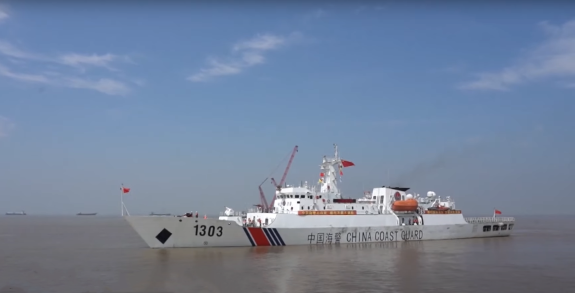
A Chinese coast guard ship

China issues new maritime law

China recently introduced a new maritime law that requires ships carrying certain types of cargo to provide detailed information to Chinese authorities when passing through. their territorial waters. This move is still part of China’s “classic” action of wanting to “make law” in international waters, where it has territorial disputes with other Southeast Asian countries.

In early 1992, China also enacted a law requiring foreign military ships to have a permit issued by China to pass through China’s “territorial waters” and submarines when passing through such “territorial waters” must float on the water, and ships carrying hazardous materials need to have the required documents. In January 2021, China passed a new Law on Maritime Traffic and in April 2021, China passed the Law on Maritime Traffic Safety. Now, according to the Global Times (China), foreign ships – including submersibles and nuclear ships, ships carrying radioactive materials, oil, chemicals, liquefied natural gas and other substances other harmful substances – “are required to provide detailed information when passing through what China calls its ‘territorial waters‘.” Beijing is increasingly ambiguous in its moves. Correspondingly, the future of the South China Sea dispute is increasingly unpredictable.

Some experts believe that the revised Law on Maritime Traffic Safety that China has just announced is difficult to be implemented, and countries that dispute or challenge China’s claims at sea are likely to defy this provision as has been in response to the Air Defense Identification Zone (ADIZ) that Beijing claims over the East China Sea. However, according to many experts, China’s move this time is much more dangerous than declaring an ADIZ in the East China Sea.

ADIZ is virtually unenforceable in the East China Sea

In 2013, China announced an ADIZ in the East China Sea, asserting that foreign aircraft, even in international airspace, must notify Chinese authorities. An ADIZ is an airspace assigned by a country to itself and requires that all civilian aircraft entering this zone be identified and subject to the control of that country. However, the ADIZ is not specified by any international treaty and is not considered a national territorial airspace. Therefore, shooting down an aircraft entering the ADIZ is an illegal and inhuman act, not to mention that there are always navigation devices on planes, so if an aircraft is shot down, it is not difficult to determine. The location of the downed aircraft is in the airspace of the country that shot down the plane. In addition, the fact that China shot down an aircraft that it thought was infiltrating its ADIZ, especially a civilian aircraft, would have catastrophic consequences for people and property, and would be criticized international vehement, may even lead to military action by the country whose plane was shot down. Therefore, until now China has done almost nothing in the implementation of the ADIZ in the East China Sea.

The risk of China sinking civilian ships in the East Sea

However, it is different from shooting at civilian aircraft in the sky. It is quite different to open fire on a ship that China considers trespassing in its territorial waters. Earlier this year, the Standing Committee of the National People’s Congress of China approved the Law on the Coast Guard, which will officially take effect from February 2021. The dangerous act has given China’s Coast Guard the power to open fire on other countries’ ships in some cases in areas claimed by Beijing, a move that has drawn fierce criticism. reverberation of the international community.

In the past, there were many Vietnamese fishing boats that were fired by Chinese law enforcement ships, causing a lot of loss of life and property. Therefore, it can be seen that it is likely that civilian ships of countries including Vietnam, especially fishing boats, do not comply with China’s requirements on declaring information when entering waters where the country’s waters are unknown. This blatant claim to sovereignty in the South China Sea will become a target for Chinese Coast Guard ships to threaten to use force or even fire warning shots, or more seriously, to sink. Meanwhile, some Vietnamese fishing boats often turn off cruise monitoring devices when fishing at sea. If these fishing boats are fishing in waters claimed by China, they will easily become targets for shooting and sinking.

Compared to shooting down a civilian aircraft in the sky in the ADIZ that China claims to set up over the East China Sea, shooting down a civilian ship in waters such as the East China Sea or the South China Sea, would be pose less of a risk, because the loss of life when a civilian plane is shot down is uncontrollable, while the Coast Guard can completely limit the loss of life in case they opened fire on a civilian ship at sea. Therefore, the Coast Guard will not be afraid to open fire on a civilian ship in the waters that China has defiantly turned into its “home pond.”

The strategy of “silkworms eating strawberries at sea”

As can be seen, China’s requirement for foreign ships to declare information when entering “Chinese waters” is another example of China’s gradual escalation of maritime jurisdiction, especially in the South China Sea. This move is part of China’s strategy of “worms eating strawberries at sea” under which Beijing maintains a constant stream of small actions that are not enough to create an event that causes war, but over time turn the undisputed waters into contested waters, and turning disputed waters into so-called “Chinese territorial waters.”

This tactic gradually leads to strategic transformations in Beijing’s favor. By means of such stealthy means of aggression under the “strawberry-eating mulberry” strategy, China is conspiring to significantly limit the options of rival claimant countries to disrupt Beijing’s containment plans and make it difficult for them to respond appropriately or effectively.

Most experts on the South China Sea believe that China’s new claim will inevitably face great challenges and difficulties from countries that have disputes with China in the South China Sea and countries with related interests in the South China Sea, including Western countries led by the US. These countries will not follow China’s rules, because they will have to suffer great consequences if they let China turn the South China Sea into its “home pond.” However, China’s new request is really a big challenge for countries that have disputes in the South China Sea with China, like Vietnam. Because Vietnamese ships, if they comply with China’s requirements in the waters under Vietnam’s sovereignty, but are greedy for disputes by China, will invisibly accept China’s de facto control. In that sea, and in case of refusal, Vietnamese ships are easy to become targets of attack by the Chinese Coast Guard.

Thoibao.de (Translated)

Source: https://www.rfa.org/vietnamese/news/blog/china-s-new-law-cant-be-implemented-in-the-scs-09082021110304.html

The seafood supply chain is broken due to a lack of labor which is due to the implementation of social distancing… In the photo: Production at Cafatex Seafood Company (Hau Giang).

Concern about supply chain disruption and unsecured social security are the reason why the Research Group of the National Economics University has just issued a series of urgent recommendations.

Supply chain disruption in many industries and fields

No longer a concern, the National Economics University Research Group has seen supply chain disruptions taking place in many industries and fields.

Firstly, the supply chain of processed-manufactured goods such as electricity, electronics, machinery and equipment… is broken in relation to strongly infected areas, such as Ho Chi Minh City. In this group, supply chains for high-tech industries (electricity, electronics, automobiles, etc.) are affected in terms of working conditions. In particular, the supply chain of the automotive industry is also affected by a double impact, because in addition to the impact of COVID-19, there is also the cause of US trade restrictions on chip manufacturers, material restrictions. semiconductor in China.

Second, the supply chain of aquatic products and agricultural products is broken because workers are isolated, separated, and circulation stagnates. Many areas of produce arrive at harvest with no output and are difficult to transport, leading to breakage.

Third, the textile and garment supply chain is broken due to lack of labor due to social distance, production conditions “3 on the spot” or “1 route, 2 destinations“… are not suitable for all localities.

It is worth mentioning that the consequences of supply chain disruption are not only difficulties and insecurities of enterprises. The Research Group of the National Economics University has a separate report on the status of social security with many concerns.

“Many workers are forced to quit or have to agree to stop working but are not entitled to timely benefits because administrative regulations cannot be implemented during blockade and social isolation. Many employees have not yet fully participated in social insurance or have participated but enterprises still owe social insurance contributions, so they are not considered as beneficiaries of Resolution 68/NQ-CP dated 7/1/ 2021 and Decision 23/2021/QD-TTg dated 7/7/2021,” the report of the National Economics University wrote.

In particular, many informal workers have completely lost their livelihoods when provinces and cities have implemented Directive 16 and Directive 16+, but they are not subject to the current supporting regulations. Many employees have to be treated and isolated due to being positive for COVID-19, but the sickness benefits of social insurance have not been resolved due to the failure to complete the procedures.

Meanwhile, the extension of the “3 on-site” and “1 road, 2 destinations” models at businesses have greatly affected the psychology and health of workers…

Urgent policy recommendations

If the two bottlenecks, which are supply chain disruptions and social security, cannot be solved, the dual goals set by the Government are unlikely to be achieved. The Research Group of National Economics University, including Assoc. Prof. Dr. Pham Hong Chuong, Rector; Assoc. Prof. Dr. Bui Huy Nhuong, Vice Rector; Assoc. Prof. Dr. To Trung Thanh, Head of Scientific Management Department; Assoc. Prof. Dr. Ta Van Loi; Assoc. Prof-Dr. Giang Thanh Long emphasized this in the report published in early September 2021.

This is also the reason for urgent and short-term policy recommendations to be proposed to the Government, with the goal of immediately removing the causes of the fault.

Accordingly, the study team recommends that the Government direct central and local ministries, agencies and sectors to follow the spirit of Directive 16, ensuring the smooth transportation of goods and production materials. .

“Allow businesses to use safe qualified workers (with 2 vaccines or a negative test in 72 hours), as well as allow safe qualified workers to participate in normal business activities, especially for workers in industrial zones and enterprises in the supply chain with independent space, separate from residential areas,” the Study Team’s Supply Chain Report proposed.

The group also proposes to remove the provisions on essential goods and services in Directive 16 and instead specify the goods and services that are not allowed to circulate; replace the “green channel” mechanism with a mechanism that allows vehicles to freely move on national highways, provincial roads and main roads (green roads), but strictly manage drivers, do not allow parking, stop and unload at random locally.

Thus, it is not necessary to force the means of transport to stop for inspection. Instead, epidemic prevention/control stations will identify safe vehicles passing by automatic identification methods. At petrol and oil refueling stations, there must be a quick test area, isolating drivers when refueling, clearly defining rest stops, including routes to and from.

In particular, the Research Team built an electronic application (App) “Safe labor resources” to inform recruitment and temporary jobs in industrial zones, provinces and cities to help “regional workers” have jobs right away, businesses that meet production conditions can easily access safe labor sources.

“Government, local authorities strengthen policy and regulatory dialogue with stakeholders, especially associations, businesses and people affected by COVID-19 lockdown,” the Research Team said in its research proposal.

The Study Team suggested that the Government ask localities to invite business representatives to join the Economic Recovery Advisory Group or the Anti-Pandemic Team for timely information on both the business situation and the issues of the employees.

4 recommendations for businesses

Firstly, digital transformation and electronic business. Join sales service platforms Tiki, Sendo… to avoid information disruption and communication with customers. Exporting businesses need to join Amazon, Alibaba, Indiamart channels…

Second, strengthen smart management solutions and digital transformation, such as strengthening surveillance cameras, buffer partitions for transferring semi-finished materials, establishing self-monitoring mechanisms, etc. 2 shifts, 3 crews, reduce at least 50% of the workforce to ensure 5K. Even, the organization disperses auxiliary production activities, increasing outsourcing, outsourcing…

Third, take advantage of the gap to research and develop new materials, substitutes, easy-to-find sources… Create a new supply chain, ensure adaptation to the epidemic situation and have a long-term plan for the supply chain in the new context.

Fourth, mobilize all resources to work with the Government and localities to speed up the vaccination campaign.

Thoibao.de (Translated)

Source: https://nhadautu.vn/dut-gay-chuoi-cung-ung-khong-chi-la-nguy-co-d57387.html

Vietnam, from “successful” in fighting Covid to “last place” in terms of recovery globally

A blockade point in the “green zone” area in Kim Lien ward of Hanoi. The Vietnamese capital has been called an “open-air prison” by international media, while the Southeast Asian country is ranked lowest in the world in terms of recovery from the pandemic.

Vietnam, internationally praised for its successful handling of the pandemic for most of last year, is now ranked the lowest in the world by the international media in terms of its ability to recover from COVID while the capital, Hanoi considered an “open-air prison” in the fight against the epidemic.

Before the worst wave of infections broke out in Vietnam at the end of April, the Southeast Asian country was still considered by the world as a model in pandemic control with the lowest infection and death rates globally.

However, with an average of tens of thousands of infections and hundreds of deaths per day while having the lowest vaccination rates in the region, Vietnam is ranked last week by Nikkei Asia on the latest COVID-19 Index of Recovery which is released at the end of each month. The leading Japanese newspaper ranked Vietnam at the bottom of 121 countries in the world with the lowest total score, 25, including 3 indicators recorded from infection management, vaccination implementation and mobility until August 31. China is the most resilient country in the world, topping the table with a total score of 73.

In the bottom group are also Thailand, Myanmar and the Philippines, Southeast Asian countries also struggling with a strong wave of infections of the Delta variant.

According to Nikkei Asia, Vietnam is now the embodiment of Southeast Asia in terms of “self satisfaction” in dealing with the pandemic after its internationally lauded successes. The Japanese English-language newspaper commented that the leaders of Vietnam – like in Thailand, Indonesia and other countries – believe that the successes in early containment of infections may continue to be repeated in the future when vaccination programs can be delayed.

“In 2020, we used the most ‘elite army groups’ to attack ‘several hundred F0 guerrillas’ and very soon triumphed over a long period of time, shaking our thighs in approval,” journalist Truong Huy San, also known as blogger O Sin Huy Duc, commented in a Facebook post that “this way of dealing with COVID” has made Vietnam 121/121th on the index of Vietnam.

However, Mr. Nguyen Nhu Phong, a resident in Hanoi, said that Nikkei’s assessment was a bit “excessively negative“.

“The epidemic situation in Vietnam is really complicated, the government has seen it all, but compared to neighboring countries, it is not a terrible thing,” Phong, now living in Ho Tay district told VOA when he said that Hanoi with a daily number of infections is a few dozen out of nearly 10 million people or even Ho Chi Minh City, which is the epicenter of the outbreak, with daily infections in the thousands people out of more than 10 million people, is still a “too small number” and does not deserve to be so underestimated.

‘Open-air prison’?

Most of the total of nearly 551,000 infections and more than 13,700 deaths in Vietnam were recorded in the outbreak since April 27, despite the government’s implementation of many measures to limit the movement of people such as blocking the whole city ​​for a long time, controlling the issuance of travel permits, dividing residential areas according to the degree of infection to follow the instructions given from Ba Dinh.

The New York Times of the US in early June said that Vietnam’s initial success in epidemic prevention was just “lucky” when it could not control the latest and worst outbreak of the disease. However, a spokesman for Vietnam’s Ministry of Foreign Affairs later denied this and said that Vietnam had “decisive decisions, strategies, drastic and creative direction from the central to local levels.”

Although Nikkei’s assessment is not objective, Phong acknowledged that those “drastic” measures are no longer highly effective and that Vietnam has had initial subjectivity in fighting the epidemic.

“(They) thought tracing and isolation could be prevented, but they probably didn’t think it was this dangerous (and) terrible at first,” said Mr. Phong. “Through the instructions of the government, it is clear that Vietnam has now absorbed the blow and is putting all its efforts to prevent it.”

The Vietnamese government over the past few months has released a number of directives and guidelines for implementing social distancing that many consider “overlapping.” The biggest concern now expressed by many people on social networks is that the issuance of road permits under the newly introduced Directive 20 applies to the three “red, yellow, and green” zones in Hanoi, where the implementation of Social distancing for more than 1 month despite low infection rate.

Commenting on these restrictions in the Vietnamese capital, French TV channel TV5 and a Belgian newspaper called Metro Time claim that Hanoi has been turned into an “open prison” because of the COVID pandemic.

A resident of Hanoi’s Old Quarter named Ho Thi Anh told Metro Time, a free newspaper in the city of Brussels, that her entire neighborhood is cordoned off with barriers and “it’s like a detention center.” And TV5 said that 8 million Hanoi residents have been “ordered to self-contain themselves” since the end of July to fight the pandemic, in which one of the Hanoi residents interviewed, named Nguyen Dinh Ngoc, said that “we don’t have freedom of movement” but said it was important to him to comply with government directives.

Journalist Huy San asked that until September 21, “Hanoi still has 5-7 dozen F0 every day like now, how long is the city planning to ‘lock up people‘.” This blogger suggested that the country’s leaders “should have a meeting at a higher level than Hanoi to decide on the plan” for the capital and wrote that “don’t let the world see the capital of a developing country as a guerilla base.”

Former Vietnam News Agency journalist, Luu Kha, shared his feelings on his personal Facebook page that “as a patriot, I feel really hurt and ashamed when Vietnam is ranked the world’s lowest by Nikkei Asia on fighting COVID and Hanoi was called an ‘open-air prison’ by a Belgian newspaper.” He also urged state leaders that “this is the time to face the truth and speak the truth.”

Thoibao.de (Translated)

Source: https://www.voatiengviet.com/a/viet-nam-tu-thanh-cong-chong-dich-den-kha-nang-phuc-hoi-te-nhat-the-gioi/6216031.html

Vietnamese Coast Guard ship patrols in the Paracel Islands.

A rare recent discovery at the UK National Archives may provide yet another piece of evidence that casts doubt on China’s claim of historic rights to Paracels (Vietnam calls it the Hoang Sa)- an area currently under disputes in the South China Sea (East Sea as Vietnam names it).

After months of painstakingly searching the archives, Bill Hayton, a former journalist and researcher, found a semi-official document that shows that: Until the late Qing Dynasty, the Chinese authorities still did not consider Paracels to be part of its territory.

Hayton, author of the books “The Invention of China” published in 2020 and “South China Sea” in 2014, discovered an 1899 translation of a letter, in which the Qing Dynasty’s agency equivalent of the Ministry of Foreign Affairs – informed British officials that the Chinese government could not accept responsibility for the looting of a ship that occurred late in late 1890s in Paracels.

The letter refers to the so-called “Copper Bellona Ship Case” – an incident involving the German ship Bellona that was wrecked in Paracels a few years earlier and the amount of copper cargo that the ship was carrying. The good was stolen by the Chinese fishermen.

Translation of a letter from the Qing Dynasty general secretary to Henry Bax-Ironside of the British Embassy in Beijing on August 8, 1899. [British National Archives / Bill Hayton]
The Chinese government “refuses to pay” for the volume of copper items insured by the UK because the archipelago is in the “high seas” and is not part of China’s territory.

The original Chinese letter has yet to be found and it is most likely lost or destroyed, so this translation is to date the first and only contemporary copy of the document. This official Chinese data is found to this day.

Hayton said that he also found a transcription of another letter from the Governor General of Liangguang – an area comprising the two provinces of Guangdong and Guangxi – addressed to Mr. Byron Brenan, the British consul in Guangzhou on April 14, 1898 about the same incident. Governor General Tan Chung Lan wrote that the Chinese government could not protect the shipwrecks because they were in the “deep blue sea” and so China could not accept the compensation claims.

“This is still not solid evidence,” Mr Hayton said. “But this could be useful information for Vietnam to make the argument that China was only interested in Paracels later.”

The case of the Ballona bronze ship was also mentioned in a letter from the Governor-General of Indochina to the French Minister in charge of Colonies in 1930. In the letter, the Viceroy of Guangdong was quoted as saying that Paracels were “waste islands” and “do not belong to China or Vietnam” and “no special agency is responsible for controlling these islands.”

Politically, such issues of historical evidence remain sensitive for the South China Sea claimant states – especially since China often justifies maritime and its extensive territory claims on the basis of historic rights – a position rejected by an international arbitration tribunal in 2016 in a case initiated by the Philippines.

Nguyen Nha, a famous Vietnamese historian, acknowledged that the newly discovered letter is a valuable document affirming that Paracels are not Chinese.

Vietnam, Taiwan and China all claim sovereignty over the Paracels, which are now completely under Chinese control.

Both Hanoi and Beijing have produced many historical documents, often copies or imitations because it is nearly impossible to find the originals to substantiate their claims.

Hayton’s discovery has attracted the attention of researchers on the South China Sea.

Stein Tonnesson, a Norwegian historian and South China Sea researcher, said that the letter “could help confirm other sources that the Qing Dynasty at that time did not consider Paracels as Chinese territory.”

“However, in 1909 this country claimed the Paracels as their territory and I am not sure that the absence of a claim in 1899 would invalidate the claim it made 10 years later. are not.”

“China will confuse matters by questioning the authenticity of the letter,” warned Ian Storey, a senior research fellow at the Institute of Southeast Asian Studies in Singapore (ISEAS).

On social media, Hayton’s statuses about the letter stirred public opinion. Some critics have questioned the accuracy of the English translation of the letter.

Hayton said he believes “There will be an alphabetical transcription of the Chinese letter somewhere” and he is looking for it.

Regardless of the outcome, according to researcher Storey, “no single piece of evidence can be enough to bring an end to the long war over documents and maps between Vietnam and China.”

Thoibao.de (Translated)

Source: https://www.rfa.org/vietnamese/in_depth/archive-find-could-hurt-chinas-historic-claim-to-paracel-islands-09082021113246.html

Vietnamese Coast Guard ships patrol in the East Sea

As soon as China announced official implementation of the Law on Maritime Traffic Safety in the South China Sea (Vietnam calls it the East Sea) which took effect from September 1, the US Department of Defense on the same day spoke out that it only considers this act threatening freedom of to navigation and hindering free trade and the rights and interests of countries in the sea as well as other coastal states.

AsiaNews on September 2 quoted a spokesman for the US Department of Defense as saying that the United States reaffirmed China’s illegal maritime claims, including in the South China Sea, pose a serious danger and threat to the freedom of navigation, overflight and commerce of countries in the region.

In a notice by the China Maritime Safety Administration, Beijing required foreign ships entering China’s “territorial waters” to report information to the China Maritime Safety Administration. Specifically, submarines, nuclear ships, ships carrying radioactive materials, ships transporting oil, chemicals and other toxic substances … when passing through China’s territorial sea, they must declare their names, numbers, and locations and the time to the places to be docked.

China’s new regulation is said to go against the principle of the 1982 International Convention on the Law of the Sea, which grants foreign ships the right to so-called “innocent passage” in other countries’ territorial waters.

CSIS experts – Center for Strategic and International Studies in Washington said that the introduction of the new regulation by China’s Maritime Security Administration merely demonstrates Beijing’s power and challenge to international decisions that they never wanted to accept.

On September 1, an article published in the Australian Financial Review, titled “Australia rejects Beijing’s bid to tighten grip on South China Sea,” the Australian Department of Defense emphasized that any similar maritime regulations must comply with the requirements of international law, especially the United Nations Convention on the Law of the Sea (UNCLOS). The Australian Navy will defy China’s new decree that foreign ships entering “China’s territorial waters” will have to declare their presence, while insisting that Australian warships will continue to exercise their right of maritime freedom in accordance with international law.

In Vietnam, during a press conference held on September 1, when asked by reporters about China’s move, Foreign Ministry’s Spokeswoman Le Thi Thu Hang, still with the usual statement when raising the issues regarding the East Sea, said that “Countries need to strictly comply with the international treaties to which they are members, especially the 1982 United Nations Convention on the Law of the Sea (UNCLOS) – the legal framework for all activities on the seas and oceans, when promulgating domestic law documents related to the sea.”

Le Thi Thu Hang continued to affirm that Vietnam resolutely and persistently takes measures in accordance with international law to enforce and protect Vietnam’s sovereignty over the Hoang Sa (Paracels) and the Truong Sa (Spratlys); sovereignty, sovereign rights and jurisdiction over its waters are determined in accordance with the provisions of UNCLOS.

New Regulation-Old Strategy

RFA had a conversation with researcher Tran Thi Bich, Southeast Asia Program of the CSIS Center for Strategic and International Studies in Washington DC. Ms. Tran Thi Bich said that the regulation itself is new, but China’s strategy is not new:

“Over the years, Beijing has systematically consolidated its claims in the South China Sea. These include the introduction of the Law on Territorial Sea and Contiguous Zone in 1992, the publicization of the nine-dash line in 2009, and the establishment of Sansha City as a provincial city to manage the South China Sea in 2012. In addition, by systematically, China has harassed and obstructed the oil and gas exploitation activities of Vietnam and other central countries in the region. This new regulation is part of China’s cross-cutting strategy.”

Regarding Vietnam’s official response, through the spokesperson of the Ministry of Foreign Affairs Le Thi Thu Hang, was often considered by the domestic online community as weak and perfunctory, researcher Tran Thi Bich replied:

“From old time immemorial, not only when expressing concern about China’s actions but also when supporting claims in its favor in the East Sea, Vietnam has always avoided naming any of the countries in the South China Sea by name in its statements. The Foreign Ministry’s statement this time about China’s new law is no exception.”

China again uses “ambiguous” tactics

Earlier, Vietnam’s state-controlled media quoted researcher Tran Cong Truc, former head of the Border Department, who criticizes China for giving vague definitions in the new document, saying that Beijing is trying to legalize the territorial sea area of ​​12 nautical miles, even 200 nautical miles exclusive economic zone around the semi-submerged shoals and reefs in the East Sea that they have occupied. He affirmed that the places occupied by China were in the exclusive zone and continental shelf of the countries bordering the East Sea.

Southeast Asian researcher Tran Thi Bich explains the word “vague” with a different perspective:

“It is quite true, for example in the announcement of the nine-dash line, so far, China has not specified where the nine-dash line is, where the coordinates of those points are.

Then, just like when China introduced new rules, it was not clear what behavior violated those rules and what China would specifically do to deal with such violations. This makes the surrounding countries confused, it is impossible to compare those provisions of China with international law to be able to reason more clearly with China.”

Asked in addition to the usual verbal or written responses, what more can Vietnam do in this situation, researcher Tran Thi Bich said:

“The fact that China introduced a new law puts Vietnam in a very awkward situation. If it follows China’s new regulations, it means that Vietnam recognizes China’s claims in the East Sea.

On the other hand, if they do not comply, Vietnamese fishermen and ships entering the waters claimed by China are likely to be harassed or even arrested. I think only international law can be used to deal with China.

As a small country, it will be difficult for Vietnam to deal with China effectively. The best way now is for major countries to voice criticism of China’s unilateral decisions and non-compliance with International Law, and continue to exercise freedom of navigation to challenge China’s claims.”

Thoibao.de (Translated)

Source: https://www.rfa.org/vietnamese/in_depth/vietnam-should-go-on-with-free-navigations-on-east-sea-despite-new-rules-from-china-09042021085510.html

Chinese Foreign Minister Wang Yi

Chinese Foreign Minister Wang Yi will visit Vietnam, co-chair a meeting of the Steering Committee for Bilateral Cooperation, and “focus” on COVID-19 epidemic prevention and control later this week.

Chinese State Councilor and Foreign Minister Wang Yi will pay an official visit to Vietnam on September 10-12, according to the Chinese Foreign Ministry.

Wang will visit Vietnam, Cambodia, Singapore and South Korea from September 10-15 at the invitation of his counterparts from these countries.

Chinese Foreign Ministry spokesman Wang Wenbin on September 7 said that during his visit to Vietnam, Foreign Minister Wang Yi will co-chair the 13th session of the China-Vietnam Steering Committee for Bilateral Cooperation together with Vietnamese Deputy Prime Minister Pham Binh Minh.

During the visit, Mr. Wang Yi will conduct “extensive strategic exchanges with all parties, strengthen Belt and Road cooperation, and promote the building of a community with a shared future for mankind,” said Mr. Wang at a regular news conference in Beijing.

According to the Global Times- the mouthpiece of the Central Committee of the Communist Party of China, Foreign Minister Wang Yi’s visits will mainly focus on COVID-19 epidemic prevention and cooperation.

Wang’s visit is made at the invitation of Vietnam’s Permanent Deputy Prime Minister Pham Binh Minh and Foreign Minister Bui Thanh Son.

The SCMP site on September 8 reported that Foreign Minister Wang Yi’s trip to the region comes just weeks after a brief visit by US Vice President Kamala Harris, who has sought to reaffirm the US presence in the Asia-Pacific during stops in Vietnam and Singapore late last month.

A few hours before Vice President Harris arrived in Hanoi on August 24, Chinese Ambassador Hung Ba had a meeting with Prime Minister Pham Minh Chinh and he promised to give Vietnam two million more doses of a COVID-19 vaccine. At the same time, the Chinese side pledged to consider continuing to donate vaccines to Vietnam in the near future.

Vietnam’s state-controlled media quoted Chinh as saying that Vietnam attaches great importance to the traditional friendly neighborliness and comprehensive strategic cooperation partnership with China. He said: “Vietnam adheres to the foreign policy of independence, self-reliance, multilateralization, diversification, active international integration and is a responsible member to the international community, not unite with one country against another.”

Thoibao.de (Translated)

Source: https://www.voatiengviet.com/a/ngoai-truong-trung-quoc-vuong-nghi-se-cong-du-vietnam/6217253.html

US Vice President Kamala Harris and Vice President Vo Thi Anh Xuan in Hanoi on August 25, 2021.

Outsiders believe that Vietnam’s diplomacy is low-key through the reception of US Vice President Kamala Harris in late August. In fact, Vietnam knows what the Biden administration needs at the moment, but because it is in a position of not being able to “resist China,” it has to “evade” the essential requirement during Ms. Harris’s visit. Although the two sides have reached many agreements, if Vietnam continues its current swinging policy, will the upcoming opportunities become challenges in the new era?

China threatens Vietnam

All press at home were ordered to reprint the official statement of the Ministry of Foreign Affairs, according to which, “in an atmosphere of openness and mutual understanding,” Prime Minister Pham Minh Chinh received the Chinese Ambassador to Vietnam in the Government office in Hanoi on the afternoon of August 24, 2021. But the content placed at the end of the announcement is the tip of the iceberg. Ambassador Xiong Bo declared “China is ready to coordinate and soon complete a number of key cooperation projects, including the Cat Linh-Ha Dong elevated railway.” At the end of the session, Xiong Bo also “compensated” with another promise: “We will work with Vietnam to well control disagreements and properly handle the problems…” [1]. The Chinese ambassador has carried out his mission to “smear” Vietnam in the eyes of the international community by forcing the Vietnamese government leader to receive him and issuing a statement that reduces the significance of the visit of the US Vice President.

Observers must immediately ask the question, the Cat Linh-Ha Dong elevated railway line has a length of 13.5 km, started in October 2011, what is the hurry that Xiong Bo has to knock on Pham Minh Chinh’s door at the time he was preparing to welcome the national guest? This is the route No. 2A invested and built with China’s ODA loan. The Cat Linh-Ha Dong elevated railway was approved in 2008 with a total investment of more than VND18 trillion ($868.04 million) in which, the Chinese loan is more than VND13.8 trillion. After 8 times of adjustment, broken progress, doubled expenditures, so far the project has not been put into operation. According to experts, it is ironic that the Chinese Ambassador to Vietnam thinks that it is a symbol of the friendship between Vietnam and China. In fact, this is a golden weapon for China to control, creating economic problems not only for the leaders of Hanoi, but also for the entire Vietnamese people, who have to pay taxes to pay for that friendship [2]

What Vietnam’s leaders fear most in the Cat Linh-Ha Dong elevated railway case is that China may publicize huge bribes that lead to the project progress failure, as well as the real reason behind why it has not been completed until now. According to PhD senior economist Le Dang Doanh, China is a “master of bribery” with real money so that their business can win bids in many projects. According to experts, winning bids in other projects of Chinese enterprises is the same. An anonymous insider source said that China is willing to give commission at least 30% in “fresh money” [3]. To put it simply, the lowest, 30% of the above $700 million would involve how many “source leaders” over all that time. It is too dangerous, if not to keep the seats for the comrades whose “side” has not been revealed yet “lays in many straws!”

Do not think too far about the Chengdu agreements or the high-level oaths of “similar culture and political doctrine, interrelated destiny…” between the two regimes in Hanoi and Beijing! Both are much more practical than people think. If Vietnam does not “adequately handle” China’s specific requests on the occasion of the US Vice President’s reception in particular and the entire policy of “closer to America and away from China” in general, the consequences will be incalculable for the current leadership in Hanoi which has just sworn. The story of Cat Linh-Ha Dong elevated railway is just one of the ultimatums drawn from many chess positions, “shaking the tree to scare the monkey” which is already designed so that when needed, they would sacrify both senior leaders and lower-ranking officials. The so-called “relative destiny” is sometimes not a lofty ideology, much less for the sake of the nation, it’s just an individual’s position, power and money of the group through the “huge” bribery cases that China used to bully Vietnamese leaders.

However, if they are willing to let Beijing threaten one-way, the Vietnamese leaders themselves will fall into a situation of “double fear.” They would be under pressure from China to accuse them of taking money for bribes, on the other hand, they are afraid of both the reaction of the people and the factions that are opposing them. In fact, according to observers, Beijing has long been “covering up” hidden business deals as well as conflicts in the East Sea and wants to use many cards to bargain, forcing Hanoi to compromise. But the more humbly Hanoi is, the more China will gain, so much so that both the leadership of Beijing and Hanoi are also afraid that if the “junior” is pressed too hard, the Vietnamese leader may lose legitimacy. That’s not to say, they may be beaten by the factions themselves within the party, just for the sake of power and money, overthrow in the form of royal revolutions. [4].

Why is Hanoi “paralysed“…

Not only Pham Minh Chinh, all Vietnamese leaders are like a frog meeting a snake, when face with China’s policy of “sticking the wheel” with respect to

Vietnam – America relations as well as other major policies related to internal politics or diplomacy. Nguyen Phu Trong himself, since December 2015, when he was preparing for the congress, once comforted his subordinates: “If we had had a clash (with China), how unstable is the situation now? Can we sit here and discuss the party congress?” For Nguyen Phu Trong, organizing the party congress must of course have a higher priority than national independence, national sovereignty and territorial integrity! But after being condemned by the public, during a meeting with voters on the morning of March 24, 2021, General Secretary cum State President Nguyen Phu Tring was forced to confess, “There were incidents in the East Sea, the relations between the West , the southwest handles very delicately, very wisely…” But can “tactiness” and “skill” be able to hide forever from the people?

During her visit to Vietnam and Singapore (August 22-26), Vice President Harris twice condemned Beijing’s “coercion” and “intimidation” actions towards neighboring countries. Ms. Harris made a call to Vietnam to join the US in fighting those “bullying” acts of China. The Vice President also did not hesitate to unilaterally propose to upgrade the US-Vietnam comprehensive partnership to a strategic partnership.

Unfortunately, Ms. Harris’s strong call is like “stones thrown into the pond.” The Vietnamese leadership has been neutralized by China, has lost the ability to react in the fragile balance between the current fierce Sino-American competition.

In fact, China has paralyzed the Vietnamese leadership in two ways. First, Beijing always pretends that the security rift between the two countries China-Vietnam is insignificant, in order to reduce the convergence of interests between the US and Vietnam on issues in the sea and islands as well as in the region. China always forces Vietnam to adhere to the “four nos” policy, which is actually the birthplace of “boiled frog syndrome” which is gradually heated to the point of boiling, it is too late. Second, China always emphasizes ideological values, the “vine leaves” of the community with a common destiny between the Communist Party of China and the Communist Party of Vietnam, regularly warns Hanoi about a “color revolution” backed by the United States, in efforts to keep Vietnam away from US diplomatic upgrading campaigns. An examination of what the Chinese media and academics have heard in recent years reveals the purposeful nature of this disruptive strategy.

Vietnamese leaders are well aware of how important Harris’s arrival in Hanoi was to the United States. In other words, because of the “riot” in Afghanistan, naturally, Vietnam was pushed up “a few prices.” If his hand is high, on the one hand, Pham Minh Chinh will continue to receive Xiong Bo in case he issues an ultimatum, on the other hand, as a self-governing country, Ba Dinh’s leadership can completely organize a meeting for the American Vice President deservedly. At least roughly the same level as the island nation of Singapore shows (Prime Minister Lee Hsien Loong invited, held talks and held a joint press conference with Ms. Harris). Unfortunately, before the flight left Hanoi, Ms. Harris was forced to hold a press conference by herself at the US Embassy. There, the Vice President still gave the Vietnamese people warm feelings and promised to meet again. She left Vietnam without even a joint statement. However, she still brought back to the US the never-ending hope of ordinary people in Saigon and Hanoi that she had not had the opportunity to meet due to the Covid pandemic, about a bright future for US relations. – Vietnam.

The US does not put Vietnam in a difficult position

Outsiders said that the Politburo of Vietnam had recently “lost the Chinese mind” in the reception of Vice President Kamala Harris. Recalling July 2015, for the first and only time, the US President received the General Secretary of the Communist Party of Vietnam in the Oval Office according to the ceremony for the head of state (Even though Nguyen Phu Trong was not yet in the Presidential chair). Mr. Biden, Vice President, organized the state dinner. At the end of August 2021, when the Vice President of the United States went to Vietnam, the General Secretary disappeared, Mrs. Harris left Hanoi without a trumpet or a drum. Public opinion considers it “banana” diplomacy, crude and bizarre. However, insiders understand that cowardice and ugliness are just the tip of the iceberg. Vietnam knew what the Biden government needed, but if it had “resisted China” on August 24, the Ba Dinh leader would easily lose both his lead and his fishing net.

The above tricks of Vietnam under pressure from Beijing did not bother the Americans. Forcing Hanoi to treat the US Vice President badly, but the Ba Dinh wing still volunteered to “obey“, but the Americans did not bother. The American superpower is broad-minded and very strategic. Knowing the leadership of Vietnam for many reasons, always having to be wary of a rough and wolf-like China, the US did not put Vietnam in a difficult position. The US has prepared the “Action plan to strengthen the US-Vietnam comprehensive partnership” in almost all fields, bilaterally and multilaterally, long before Ms. Harris arrived in Hanoi. Not coincidentally, right on the morning of August 25, while Ms. Harris held talks with Nguyen Xuan Phuc, then in the US it was only the morning of August 24, the White House “unveiled” “Action Plan” mentioned above. This document reveals the announcements and exchange contents of Ms. Kamala Harris in Vietnam, and at the same time demonstrates the strategic vision of the US on relations with Vietnam.

This “action plan” from the very beginning affirmed that the Vice President’s visit demonstrates the deep commitment of the United States not only to the region, but first of all to the US-Vietnam relationship. In bilateral meetings with Vietnamese leaders, Vice President Harris reaffirmed the United States’ commitment to help a strong, prosperous, and independent Vietnam, as well as free and open Indo-Pacific region, strong and self-sufficient. The long-term American vision in this plan is obviously in the national interest. “We know that maintaining and strengthening these partnerships has profound implications for the American people. And that’s why, in the years to come, we’ll come back, time and time again, as we move on and chart this next chapter in our partnership, together. beneficial,” said Ms. Harris at the press conference.

The strategic synergies between the US and Vietnam could linger. “I believe this trip signals the beginning of the next chapter in the relationship between the United States and Vietnam,” Ms. Harris told reporters. But lasting doesn’t mean forever. Once the US-China relationship requires compromise as it has historically done, the US-Vietnam strategic resonance will also change. Vietnamese strategic planners must have foreseen that danger. Therefore, the time to implement the above “Action Plan” is limited, they will have to take full advantage of the unique opportunity. It must become a mid-range power for Vietnam to be able to survive and develop in the Indo-Pacific space to be able to meet current and future challenges, together with the United States and its allies in the region. inter-regional.

Vietnam has repeatedly let favorable opportunities slip out of hand. If the policy of “three nos” and “four nos” is continued, will opportunities become challenges in the new era? Will Vietnam at that time still have the current geopolitical position to “optimize” its advantages?

Thoibao.de (Translated)

Source: https://www.rfa.org/vietnamese/news/blog/power-money-and-blunt-diplomacy-09032021142256.html

USS Benfold (DDG 65) of the United States Navy.

A US Navy destroyer conducted a maritime patrol through Da Vanh Khan (Mischief Reef) in the South China Sea (Vietnam calls it the Truong Sa) on September 8, just days after China imposed a law requiring foreign ships to notify before into waters claimed by Beijing.

The guided-missile destroyer USS Benfold “affirmed the right and freedom of navigation” within 12 nautical miles of Mischief Reef in the Spratlys, according to a US Navy 7th Fleet bulletin. Meanwhile, the USS Carl Vinson and the US strike group are training elsewhere in the region, according to the US Navy.

China has been renovating and building military infrastructure in Spratlys since 2014, according to the Asia Maritime Transparency Initiative under the Center for Strategic and International Studies (CSIS). Mischief Reef is an island that China has reclaimed and occupied, but also claims by Vietnam.

The USS Benfold conducted the seventh Navy freedom of navigation operation in the region this year, according to a statement from the US Department of Defense emailed to Stars and Stripes on September 8 and from Lieutenant Mark Langford, spokesman for the 7th Fleet. The last time the United States conducted a freedom of navigation operation in Spratlys was in February 2021.

“The United States challenges excessive maritime claims regardless of the country’s assertions of them,” the statement said.

On September 7, Carl Vinson carrier’s Spokesman Miranda Williams told Stars and Stripes via email that it had organized flight operations and strike drills at sea, and coordinated training between the two surface ships and air units.

“Aircraft carrier activities in the South China Sea are not new or unusual,” Williams wrote. “Our Navy has regularly flown, patrolled and operated throughout the Indo-Pacific region in accordance with international law for more than 75 years and will continue to do so.”

SCMP website quoted a spokesman for the People’s Liberation Army of China (PLA) as saying that the US ship USS Benfold had entered what it called China’s territorial sea near Mischief Reef, in the disputed Spratlys without the approval of the Beijing government.

The PLA “organized air and naval forces to track, monitor, and expel this ship,” said Senior Lieutenant Colonel Tian Jun Li, spokesman for the Southern Regional Command, or called the Southern Region Command of the PLA.

Chinese broadcaster CGTN reported on September 8 that the Chinese military had “chased away a US guided-missile destroyer that entered China’s territorial waters near Spratlys in the South China Sea.”

“The actions of the US side have seriously violated China’s sovereignty and security, which is further evidence of maritime hegemony and militarization in the South China Sea,” said Li.

“China has indisputable sovereignty over the islands in the South China Sea and adjacent waters. Soldiers in the region are always on high alert, resolutely protecting national sovereignty and security as well as peace and stability in the sea,” Li said.

Spokesperson of the Ministry of Foreign Affairs of Vietnam Le Thi Thu Hang at a press conference.

In a statement on September 8, the US Navy’s 7th Fleet said the PLA’s claim about the USS Benfold mission “is untrue.”

“The USS Benfold conducted this freedom of navigation operation (FONOP) in accordance with international law and subsequently continued to conduct normal operations in international waters. This operation reflects our commitment to upholding freedom of navigation and the lawful use of the sea as a principle,” the 7th Fleet said in a statement.

On September 1, a Chinese law went into effect requiring certain foreign ships, including nuclear-powered ships, submarines and ships carrying dangerous substances, to notify Chinese authorities before entering areas claimed by China, including areas such as the South China Sea.

China’s revised Maritime Traffic Safety Law contains a provision that requires foreign ships entering China’s “territorial waters” to report information about their vehicles and cargo to the country’s maritime authorities.

Vietnam has always affirmed that it has sufficient historical evidence and legal basis to assert its sovereignty over the Hoang Sa (Paracels) and the Truong Sa (Spratlys) in accordance with international law.

The Vietnamese side has not yet responded to the US naval ship’s patrol near Mischief Reef this time.

Previously, Vietnamese Foreign Ministry Spokesperson Le Thi Thu Hang used to say: “All activities of the parties in Truong Sa and Hoang Sa without Vietnam’s permission are worthless.”

Thoibao.de (Translated)

Source: https://www.voatiengviet.com/a/tau-chien-my-tuan-tra-gan-da-vanh-khan-o-truong-sa/6217264.html

Police check the travel permit of a resident in Hanoi on September 4

That is the thought that has been compressed into a public protest question of many people and households, including some central agencies in the inner city, when hearing “Directive 20” from the People’s Committee of the city.

According to state-controlled media, the above directive assigned to the police to issue a travel permit was signed by Chairman of the City People’s Committee Chu Ngoc Anh on September 3.

The Hanoi People’s Committee divided into three zones to prevent and control the COVID-19 epidemic from 6 a.m. on September 6 to 6 a.m. on September 21, 2021.

One of the biggest concerns currently raised by the domestic media is the restlessness and anxiety of people and businesses about the vague instructions for applying for and issuing travel permits in the three red-yellow-green zones differently.

This type of social distancing is almost turning the people of the capital into prisoners, turning cities and districts into giant prison camps. And police forces at all levels become prison guards, literally professional guards.

It’s immediately easy to recognize, not only “politics is the boss” as from the beginning of the anti-epidemic campaign until now. Now, if Directive 20 is accepted, “police rule” will be the next trend, despite all the consequences as we have seen from the ongoing 4th wave.

Also on September 3, the Hanoi City Police issued a “fast” document to the People’s Committees of districts, towns… on preparing conditions to be ready to coordinate with the City Police Department in the development of software to issue and check identification for “eligible people to participate in traffic through QR Code.”

The text on the notice continued: “Organizations, businesses and individuals register information through the regional police and then commune, ward and town officials approve or reject (notify by email) and then the regional police will return the approved and stamped travel permit to organizations, businesses and individuals…”

Clearly directives overlaps others, text overlaps text. People are like “great-grandchildren” going into the green forest, not knowing where to go.

After two years of looking back, within our country, the Covidvirus has caused serious harm to people’s health, loss of lives, and pain is increasingly piling up.

The situation is so serious, but for some reason, until now, the National Assembly has not once considered documents that show signs of violating the Constitution and the law.

The three Directives (No. 15, 16 and 19) of the Prime Minister are not legal documents. Now, can the Chairman of the city alone come to the above unprecedented decision against the COVID-19 epidemic?

If a “collective trauma” precedes a very specific decision of this totalitarian regime, who will be ultimately responsible before the Constitution and the law for Directive 20?

It is no coincidence that writer Huy Duc, a well-known blogger on his personal Facebook, made an urgent recommendation that he called “there should be a meeting at a higher level than Hanoi to decide the plan for Hanoi.”

The article, which has more than 15,000 interactions and 3,000 shares after about 8 hours, has the passage: “To ensure that the power of the country remains unified, it must be shown that the State of law still exists, the Constitution and the law are still in effect.”

Outside, the Belgian Metrotime newspaper headlined, “Hanoi turned into a prison.” And, by dealing with COVID like this, on September 3, Nikkei Asia ranked Vietnam 121 among 121 countries in its ability to fight the epidemic.

In 2020, we used the most “elite army groups” to attack “several hundred F0 guerrillas” and very soon triumphed and for a long time, shaking our thighs in praise.

Blogger Le Viet An, in a comment from the early days of the fourth wave of the pandemic, warned that the policy of “politics is the leader” in fighting the epidemic would lead to serious consequences.

The author especially emphasized a few months ago about two mistakes that can lead to disaster in the fight against the epidemic that still have current and scientific value today.

First, the epidemiology is fundamentally different from the law of fighting the enemy (that is, the law of war). As for the variants of the Covid virus, epidemiologists almost unanimously agree, there are many unknowns about this virus.

Second, the law of war is even more different from the law of peace. In peacetime, when doing economic business, businesses must always take into account the “opportunity cost.” Therefore, it is not possible to shout against the epidemic like fighting the enemy.

This is a key concept in economics. The “opportunity cost” is based on the fact that resources are scarce, forcing businesses to make choices. Disease has its own rules.

When fighting the enemy, we can “burn the whole Truong Son mountain range,” sacrificing human and material strength to gain independence. But when it comes to epidemic prevention / control, experts have to put human life first.

Will Directive 20 be the third major mistake? Because, if the provision is made to assign the City Police to approve the road, it is clear that Hanoi will be a giant prison camp, the police are professional prison guards and the people of the capital are reluctant prisoners.

Thoibao.de (Translated)

Source: https://www.rfa.org/vietnamese/news/blog/order-20-turns-hanoi-into-a-prison-09042021223506.html