The negative repercussions and serious consequences resulting from the implementation of Decree 178/2024/ND-CP are exposing an unprecedented governance crisis within the so-called policy of streamlining and reorganizing the government apparatus.
According to experts, a major policy decision not only requires determined implementers but also necessitates a sufficiently robust independent mechanism to reassess the policy itself.
The fact that the Ministry of Home Affairs recently had to instruct ministries, sectors, and localities to conduct a comprehensive review of all cases where Decree 178 benefits had been granted nationwide is a necessary corrective action.
However, this decision also raises a bitterly pointed question regarding the personal accountability of top leaders as well as institutional control failures.
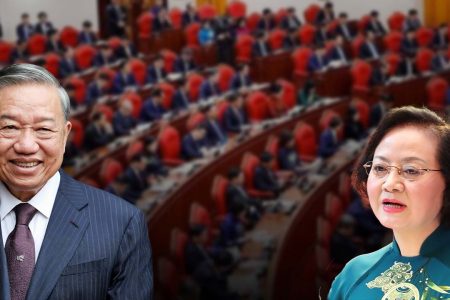
Public opinion is asking: In the “collapse” of Decree 178, is Deputy Prime Minister Pham Thi Thanh Tra a victim, or is she the one who must bear responsibility before the Party and the State?
Decree 178 was enacted against the backdrop of an unprecedented-scale reorganization of the government apparatus. In principle, streamlining the bloated administrative apparatus was absolutely necessary.
From the very initial drafting stage, experts had repeatedly issued stark warnings about the massive drain on the state budget.
In particular, they highlighted the risk of incorrectly identifying eligible candidates for early retirement and the phenomenon of “brain drain,” as capable officials with 20 to 30 years of experience exploited loopholes to slip away.
Subsequent implementation has proven that the loss of skilled experts equates to the loss of the entire administrative apparatus’s operational capacity.
These misguided decisions could result in colossal financial losses—many times greater than the budgetary funds spent to retain them.
From a policy advisory perspective, Deputy Prime Minister Pham Thi Thanh Tra serves as the head of the lead agency responsible for designing and organizing the implementation of Decree 178.
However, in response to warnings, Ms. Trà’s replies have consistently been brief: “The decision to merge or downsize has already been made by higher authorities.”
In a governance environment dominated by commanding statements such as General Secretary To Lam’s “move forward, no retreat,” the space for policy advice or expert consultation has been virtually shut down. And no one dares to voice a dissenting opinion or oppose the swift directives of the top leader.
Once a political course of action has been decided, the head of an advisory body like Ms. Tra immediately finds herself in the position of someone who can only obey orders rather than speak up to defend governance principles.
Meanwhile, General Secretary To Lam played the role of both the game designer and the organizer, and then personally stepped in to evaluate the game’s results. From a governance perspective, this is clearly a case of “being both the player and the referee.”
Ms. Trà’s acceptance of—and allowing—the head of the agency’s “reckless behavior” to overshadow everything else has made her an “accomplice” in the embezzlement of thousands of billions of dong from the state.
According to the theory of checks and balances, no individual or organization can be completely impartial and objective when evaluating its own mistakes.
In developed countries, there are always independent policy evaluation bodies at the central level to “apply the brakes” in a timely manner before the political system careens toward the abyss.
In short, Ms. Pham Thi Thanh Tra is a product of a governance system lacking critical scrutiny, where warning voices are sidelined by the pressure to “run and queue at the same time.”
A strong state is not one that never makes mistakes, but one that proactively designs an independent oversight mechanism to listen—and has the courage to stop before it’s too late.
Trà My – Thoibao.de