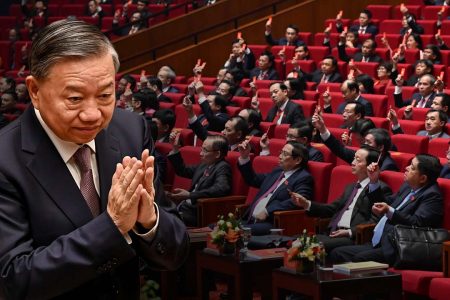
At the National Conference organized by the Politburo on the morning of September 3, 2026, Trinh Van Quyet, Head of the Central Propaganda and Education Commission, announced the shift from “studying and following” to “studying and putting into practice” Ho Chi Minh’s ideology, a move that has caused a stir among the public.
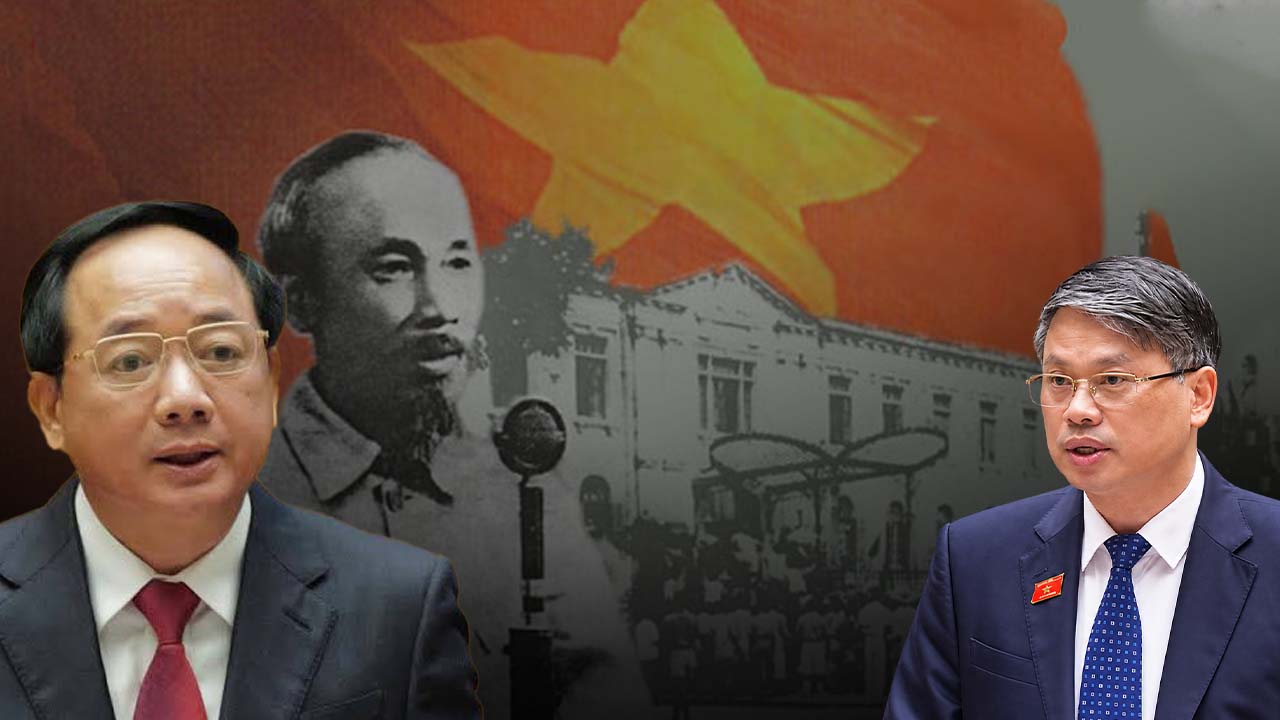
According to Mr. Quyet, the implementation of Directive 07—which replaces the previous Directive 05—needs to bring about a fundamental shift “from awareness to action, from commitments on paper to tangible results.”
Notably, Mr. Trinh Van Quyet candidly acknowledged that, after decades of implementing the campaign, “formalism” remains deeply entrenched, with much study but little tangible progress. Meanwhile, the pressing issues facing the people have largely remained unresolved.
However, according to observers, the shift in terminology from “following” to “practicing” is not merely a step forward in propaganda thinking, but essentially an implicit acknowledgment of the failure of political campaigns that have spanned many decades.
Many argue that the campaigns to study Ho Chi Minh’s ideology, though continuously launched, are merely superficial movements that consume significant budget resources yet fail to stem the moral decay within the system.
The paradox lies in the fact that the more these study campaigns are intensified, the more the number of officials and Party members embroiled in legal trouble due to corruption and policy manipulation surges dramatically.
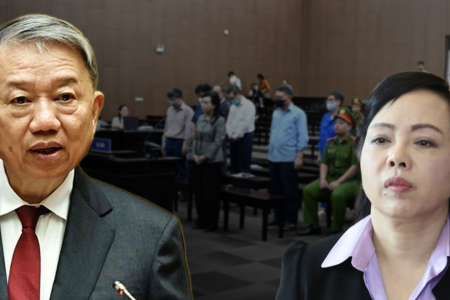
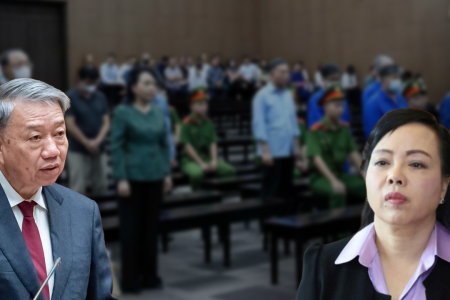
In the judicial sector, the recent public outcry over the case of former National Assembly Deputy Nguyen Sy Cuong—who caused a fatal traffic accident yet ultimately escaped punishment—is a prime example.
Corruption and bribery within investigative agencies, prosecutors’ offices, and courts have become widespread, driven by the philosophy that “what cannot be bought with money can be bought with a great deal of money,” which appears to persist rampantly.
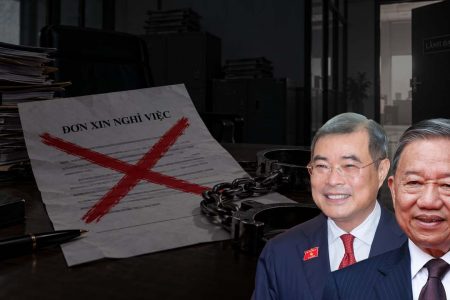
Even though Party members and leaders have undergone countless sessions studying Party Resolutions and the moral teachings of Ho Chi Minh, these efforts have not prevented them from violating the law.
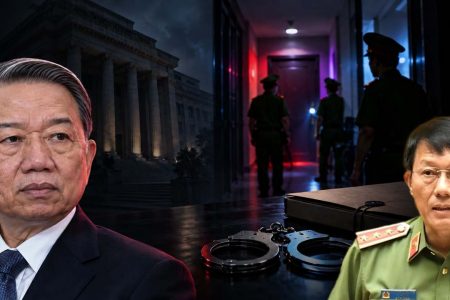
Official government statistics also reveal the extent of this comprehensive decline. Specifically, in just the first six months of 2025, nearly 760 new corruption cases were indicted, with the number of judicial officials facing criminal charges increasing by 117 percent compared to the same period last year.
At the same time, Inspection Committees at all levels have disciplined hundreds of Party organizations and tens of thousands of Party members.
This surge in disciplinary actions indicates that the disciplinary regulations governing the study of Ho Chi Minh’s moral teachings no longer maintain their seriousness or serve as a wake-up call for the ranks of Party officials and members.
Against this backdrop, Mr. Trinh Van Quyet’s call to “eradicate complacent thinking and break down barriers to stagnation” and his proposal to protect officials who “dare to think and dare to act” reflect a deadlocked reality. That is, the corrupt government apparatus fears accountability to such an extent that it sees no way out.
The statement that “morality is not measured by promises, but by the satisfaction of the people” also indicates that the leadership of the Communist Party of Vietnam has sensed the mounting social pressure.
However, the shift in terminology from “following” to “practicing” Ho Chi Minh’s ideology alone cannot bring about the necessary transformation.
This shift in terminology indicates that the Communist Party of Vietnam has acknowledged the comprehensive failure of this movement, while simultaneously striving to put principles into practice and tighten discipline.
However, without an independent mechanism to oversee the exercise of power, along with a judiciary that truly upholds the rule of law, all efforts at reform in ideological and propaganda work will once again fall into the trap of mere formality.
Public opinion holds that, when moral decay has become a systemic disease throughout the political system, demanding that officials and Party members “practice Ho Chi Minh’s morality” is merely a last-ditch attempt to revive a corpse.
It will forever remain nothing more than a costly experiment funded by taxpayers’ money!
Trà My – Thoibao.de