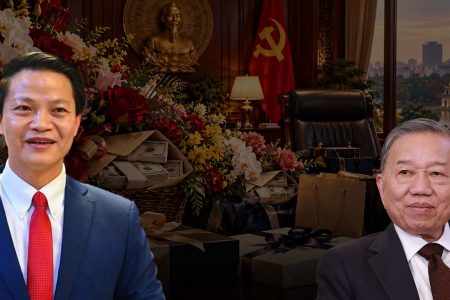
In October 2026, as planned, the Vietnamese National Assembly will have to address one of the most thorny issues in the political system when debating the Draft Law on the Organization of the Criminal Investigation Agency (Amendment).
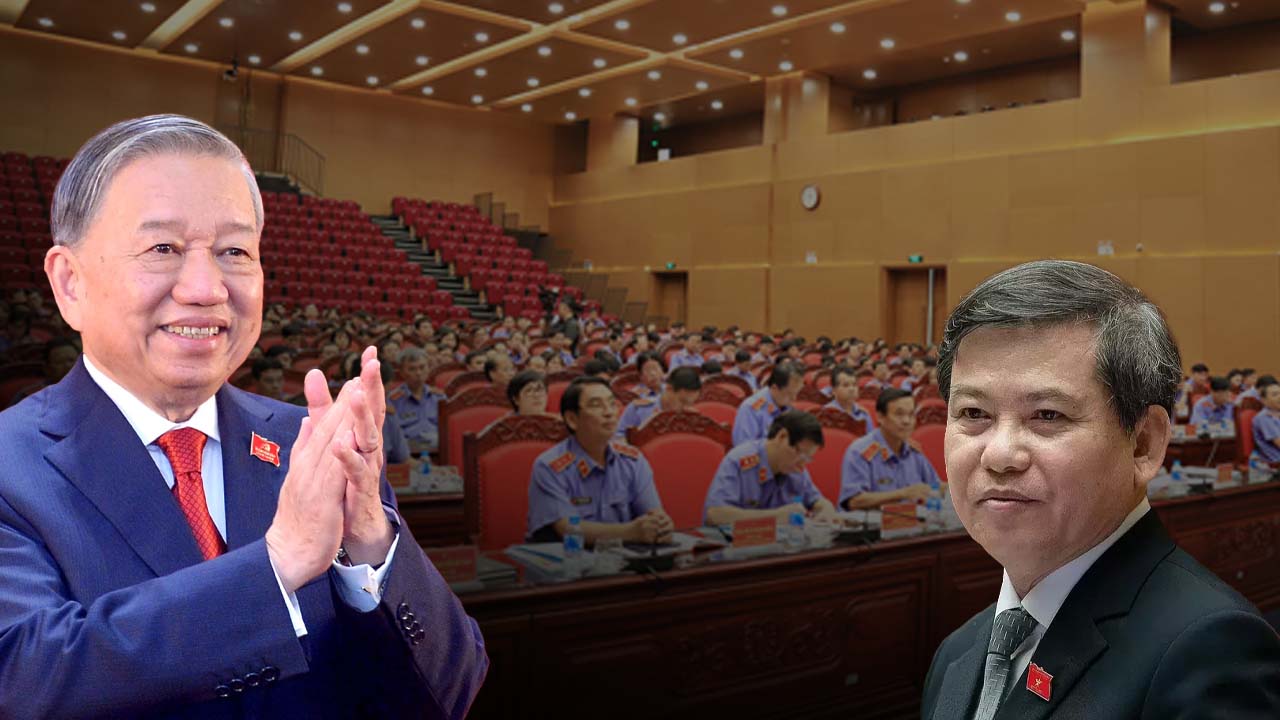
According to legal experts, this issue will directly challenge a fundamental principle of any rule-of-law state: When those tasked with upholding justice violate the law, who will investigate them?
The latest proposal from the Ministry of Public Security once again calls for the abolition of the Investigation Agency under the Supreme People’s Procuracy and the consolidation of all investigative powers under the Security Investigation Agency of the Ministry of Public Security.
The Ministry of Public Security’s argument—that streamlining the system will eliminate overlapping responsibilities and end the parallel operation of the three investigative systems (those of the Ministry of Public Security, the Ministry of National Defense, and the Supreme People’s Procuracy)—seems reasonable in the context of current reform trends.
However, according to observers, a recent case involving former National Assembly Deputy Nguyen Sy Cuong serves as a prime example: after more than a year of the case file being transferred to the Hanoi Police for investigation, the case was closed unsatisfactorily. In essence, Mr. Cuong’s case is no different from that of the female student in Vinh Long who died.
Therefore, once a case is closed, if there is consensus between the investigating agency and the People’s Procuracy at the same level, there is only one remaining avenue for reconsideration: through the Investigation Department of the Supreme People’s Procuracy.
The Supreme People’s Procuracy has repeatedly and forcefully countered the Ministry of Public Security with a sharp, warning question: If their investigative agency were to be abolished, who would investigate when a police officer commits a crime?
Surely we wouldn’t entrust the investigation to the very colleagues within the Public Security sector—those who share the same agency and command structure as the offender? Or, to put it more lightheartedly, are we supposed to let police officers investigate their own “drinking buddies”?
Practice over the past nine years has also shown that the Investigation Department of the Supreme People’s Procuracy has handled hundreds of cases of misconduct directly involving police officers, judges, court enforcement officials, and prosecutors.
While this number may represent a very small proportion of the total number of criminal cases nationwide, its significance is immense because these cases directly undermine the “credibility of the judicial system.”
Therefore, the Ministry of Public Security’s demand to abolish this agency is tantamount to eliminating cross-checks, thereby stripping away the final safeguard against the risk of abuse of power within the judicial system. However, eliminating the mechanism whereby non-police personnel investigate police officers would create a serious threat.
When investigative power is concentrated entirely within a single entity under the Ministry of Public Security—without any accompanying cross-checking mechanisms—the risk of “self-cover-up” becomes inevitable. Who will ensure that the investigator looking into judicial misconduct is not a drinking buddy, a close associate, or a superior of the very person being accused? In the context of Vietnam’s current political system, Mr. To Lam—a former Minister of Public Security—is a figure notorious for his “narrow self-interest” regarding the Public Security sector.When investigative authority is concentrated in a single unit of the Investigative Security Agency under the Ministry of Public Security, it will neutralize the judicial system’s ability to self-purge.Looking around the world, no country has built a strong judicial system by allowing a force to investigate its own internal affairs without the involvement of an independent body. If the Vietnamese National Assembly passes this change while bypassing the necessary checks and balances, it will seriously undermine social justice. Tra My – Thoibao.de =======Abolishing the Procuracy’s Investigation Agency: Streamlining or Granting Monopoly Power to To Lam?“… The proposal to abolish the Procuracy’s Investigation Agency raises a major question: is this a step toward streamlining the bureaucracy, or a shift in the balance of power in favor of Mr. To Lam in judicial proceedings?”#Vietnam #ChinhTruongVN #Thoibao