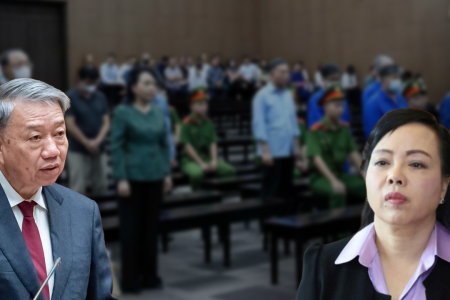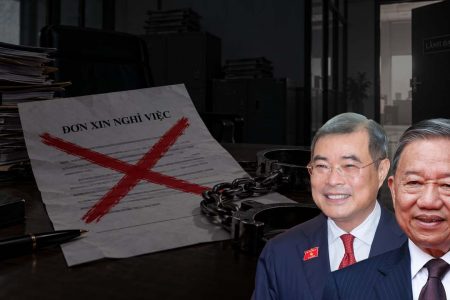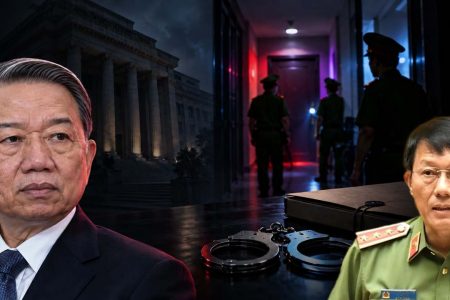
The political earthquake that occurred in the early hours of January 3, 2026, in Venezuela—when President Nicolás Maduro was arrested by the United States—was not merely the end of a dictator, but also a powerful message sent to those who cling obsessively to power.
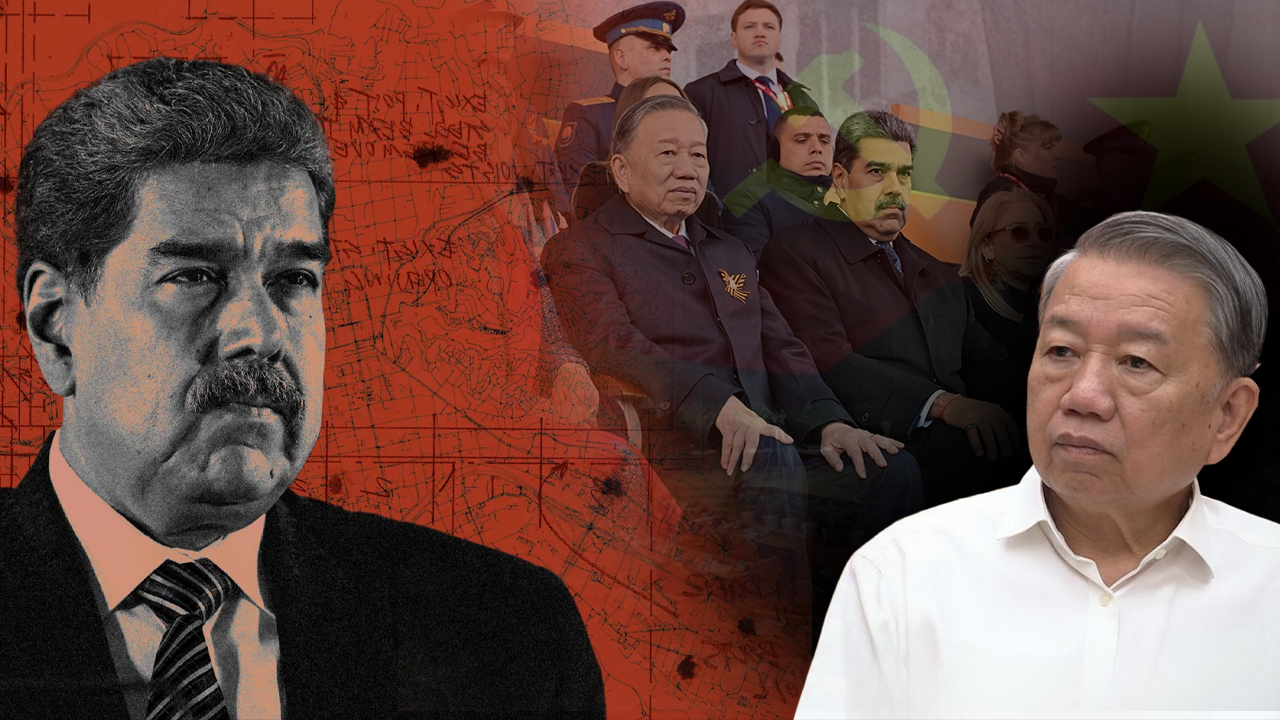
Across social media and political forums, public opinion has been seething with unsettling comparisons highlighting the striking similarities and connections between Nicolás Maduro and Vietnam’s Tô Lâm.
These parallels go beyond the image of Tô Lâm and his wife seated next to the Maduro couple at the Victory over Fascism parade in May 2025, or the official invitation extended by the head of the Communist Party of Vietnam to Maduro.
At a deeper level, the connection stems from a fundamental commonality: both men embody a model of governance rooted in blind faith in violence as a means of maintaining power, coupled with extravagant personal indulgence that stands in stark contrast to the misery of their people.
The international community has not forgotten the notorious images of “gold-plated steak” banquets associated with both authoritarian figures, Nicolás Maduro and Tô Lâm.
While Maduro casually indulged in lavish feasts in Turkey as Venezuelans scavenged through trash for food, Tô Lâm likewise shocked the world with his infamous “Salt Bae” dinner in London, right in the midst of the COVID-19 pandemic.
This coincidence is not accidental; it reflects the corruption inherent in absolute power—where rulers grant themselves privileges above the law and become completely detached from the suffering of their own people.
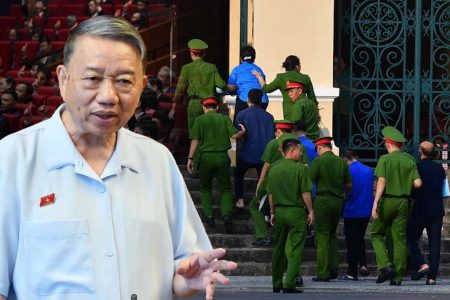
Both Maduro and Tô Lâm appear to believe that as long as they firmly control the security apparatus and the military, and are willing to suppress all dissenting voices, their thrones will remain unshakable.
However, Maduro’s collapse—within mere hours of a U.S. operation—has demonstrated that power built on fear and the barrels of police guns always carries unpredictable and uncontrollable risks.
Maduro’s sudden incapacitation revealed that even security systems once thought to be “iron walls” can be neutralized by overwhelming external forces, as well as by betrayal from within their own ranks.
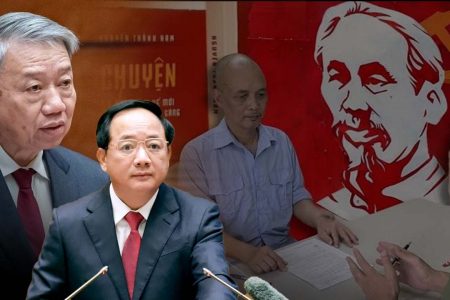
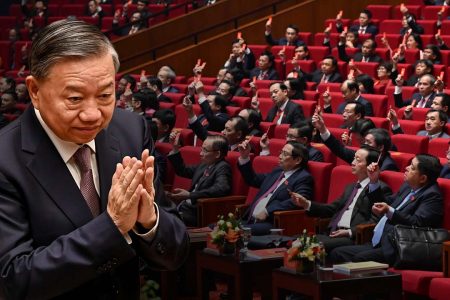
This serves as a stark mirror for Vietnam’s current political landscape ahead of the 14th Party Congress, as the Communist Party of Vietnam is witnessing unprecedented levels of factional infighting and ruthless internal purges.
According to international analysts, in a political environment where loyalty is measured by利益 (interests), and where “comrades” are ready to betray one another for survival or power consolidation, the security of General Secretary Tô Lâm is extremely fragile.
Maduro’s swift arrest has shown that once there is a signal from outside, the very courtiers who once shared the “gold-plated beef” banquets are often the first to turn their backs, transforming their former patron into a sacrificial scapegoat.
Even though General Secretary Tô Lâm continues, for now, to tighten the harshest security control mechanisms to consolidate his power, public opinion continues to raise a pressing question: Who can guarantee that Tô Lâm will not follow the same path as his friend Maduro in Venezuela?
International analysts warn that Maduro’s downfall is a death knell for authoritarian and totalitarian regimes. When power relies entirely on repression, it inevitably destroys its own legitimacy, creating enemies from within the system itself.
And no matter how heavily armed a power structure may be, it will ultimately collapse from the inside. Nicolás Maduro has already paid a heavy price for this illusion.
Although General Secretary Tô Lâm has not yet faced such an outcome, the nature of the authoritarian power game never changes—and there is no permanent place for those who act against the interests of their nation.
Trà My – Thoibao.de