On the morning of January 19, 2026, the 14th National Congress of the Communist Party of Vietnam (CPV) officially opened in Hanoi, bringing together nearly 1,600 delegates to decide the country’s political fate for the next five years.
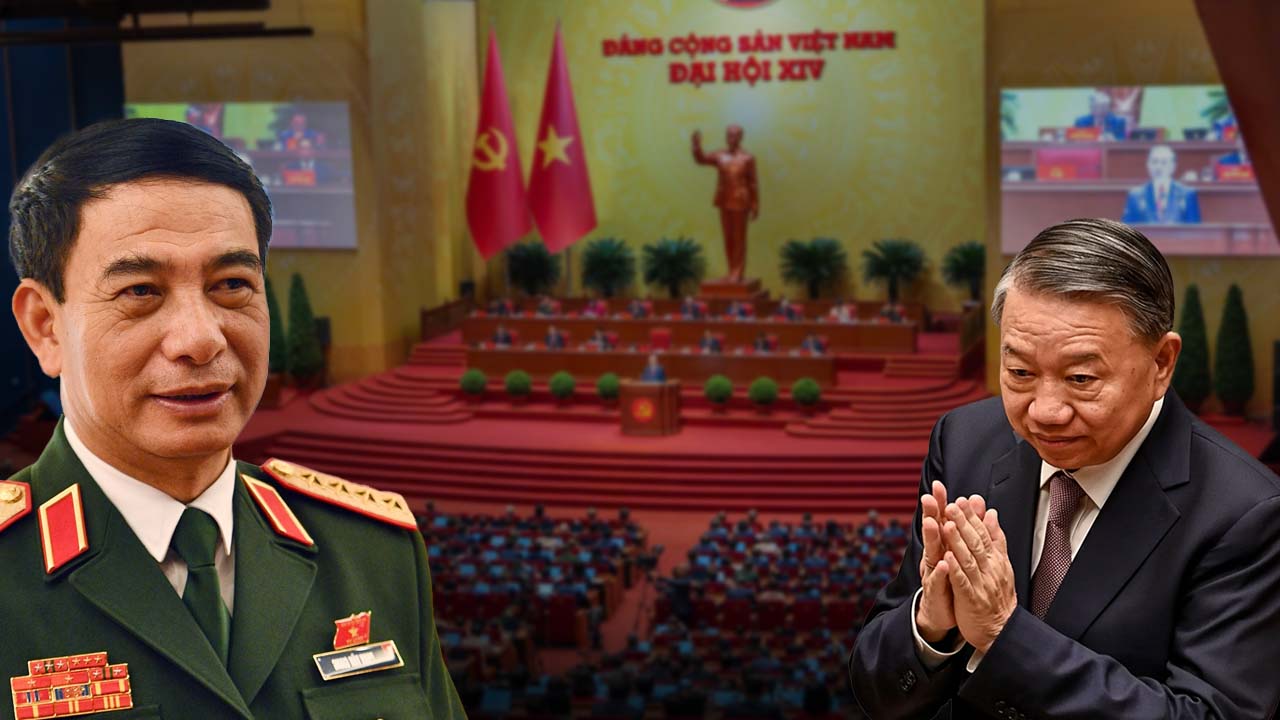
While state media have worked hard to paint a picture of unity and cohesion within the leadership, international observers widely see the event as bearing the hallmarks of an unprecedented power struggle in the CPV’s history.
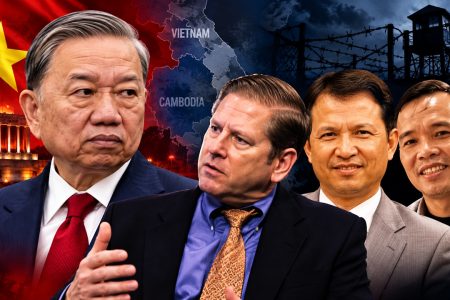
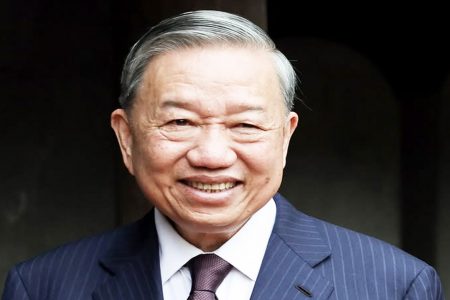
Accordingly, the focus of attention has centered on General Secretary Tô Lâm’s ambitions and the reaction of the military faction, currently regarded as the most significant counterweight.
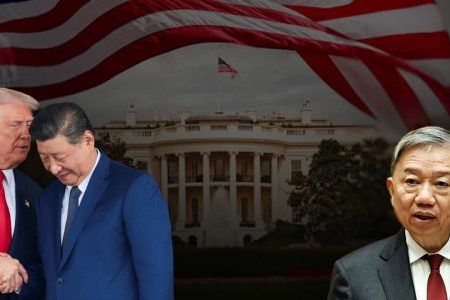
Analysts note that the 14th Congress is taking place in a context where Tô Lâm—after 18 months in power—has made little effort to hide his desire to merge the two posts of General Secretary and State President, following the model of China’s leader Xi Jinping. However, his path toward absolute power has not been smooth.
The simultaneous presence of all 16 remaining Politburo members of the 13th term on the Presidium at the preparatory session—though explained as a symbol of unity—has in fact reflected a “same-same” standoff: a tug-of-war in which no side is willing to yield.
The inability to reduce the number of people on the Presidium suggests that Tô Lâm has been unable to rein in competing factions—from Hà Tĩnh and beyond to the military—which continue to “eye each other” and restrain one another in an extremely fragile balance.
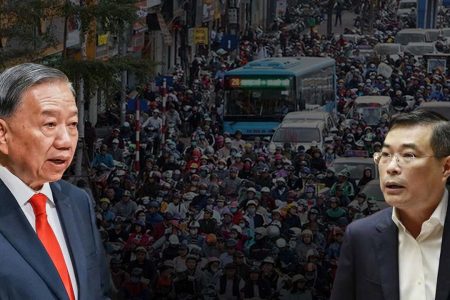
One of the hottest flashpoints is the conflict over the direction of reform. Tô Lâm has shocked the political system by pushing to merge administrative units, cutting the number of provinces and centrally governed cities from 63 to 34, and dissolving certain ministries and agencies—moves aimed at breaking up closed networks of vested interests.
However, this very “shock therapy” has generated deep resentment among civil servants and public employees throughout the state apparatus, prompting many to seek protection from the military.
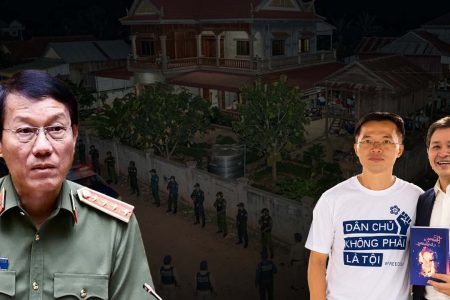
Meanwhile, the Vietnam People’s Army, with its cautious mindset, appears skeptical of Tô Lâm’s friendliness toward the West and the private sector. As a result, the biggest question hanging over the 14th Congress is what role General Phan Văn Giang, the Minister of National Defense, will play in the new political power arrangement.
Observers argue that while the likelihood of “toppling” Tô Lâm is low, the military faction is working to push Giang into the State President position in order to create a mechanism of cross-checks and prevent a scenario in which power is concentrated in a single individual.
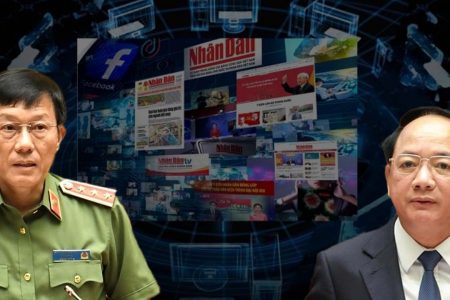
Recent social-media propaganda activities said to be controlled by the military faction have repeatedly criticized Tô Lâm and openly elevated General Giang’s standing, signaling a ruthless behind-the-scenes bargaining process over personnel at Ba Đình.
Notably, the 14th Congress observed a moment of silence for the late General Secretary Nguyễn Phú Trọng—an event widely viewed as ironic and entirely undesirable for the incumbent General Secretary.
Over the past 18 months, Tô Lâm is believed to have worked to erase his predecessor’s legacy in order to establish his own imprint, yet at the 14th Congress he was still compelled to perform this tribute to maintain the Party’s legitimacy.
This further indicates that the “conservative” camp remains steadfast and strong in the face of the overwhelming force of General Secretary Tô Lâm’s police faction.
In short, the election results for the new Central Committee and Politburo at the 1st Plenum of the 14th Central Committee after the Congress will be the final answer.
Will Vietnam follow a model of strong centralization under Tô Lâm’s iron hand and a “police-state” style of governance, or will it return to a form of collective leadership constrained by the military, as has long been the case?
Trà My – Thoibao.de