In Vietnamese political life, high-level personnel changes amid the large-scale reforms being vigorously promoted by General Secretary and President Tô Lâm are becoming the focus of attention for both domestic and international public opinion.
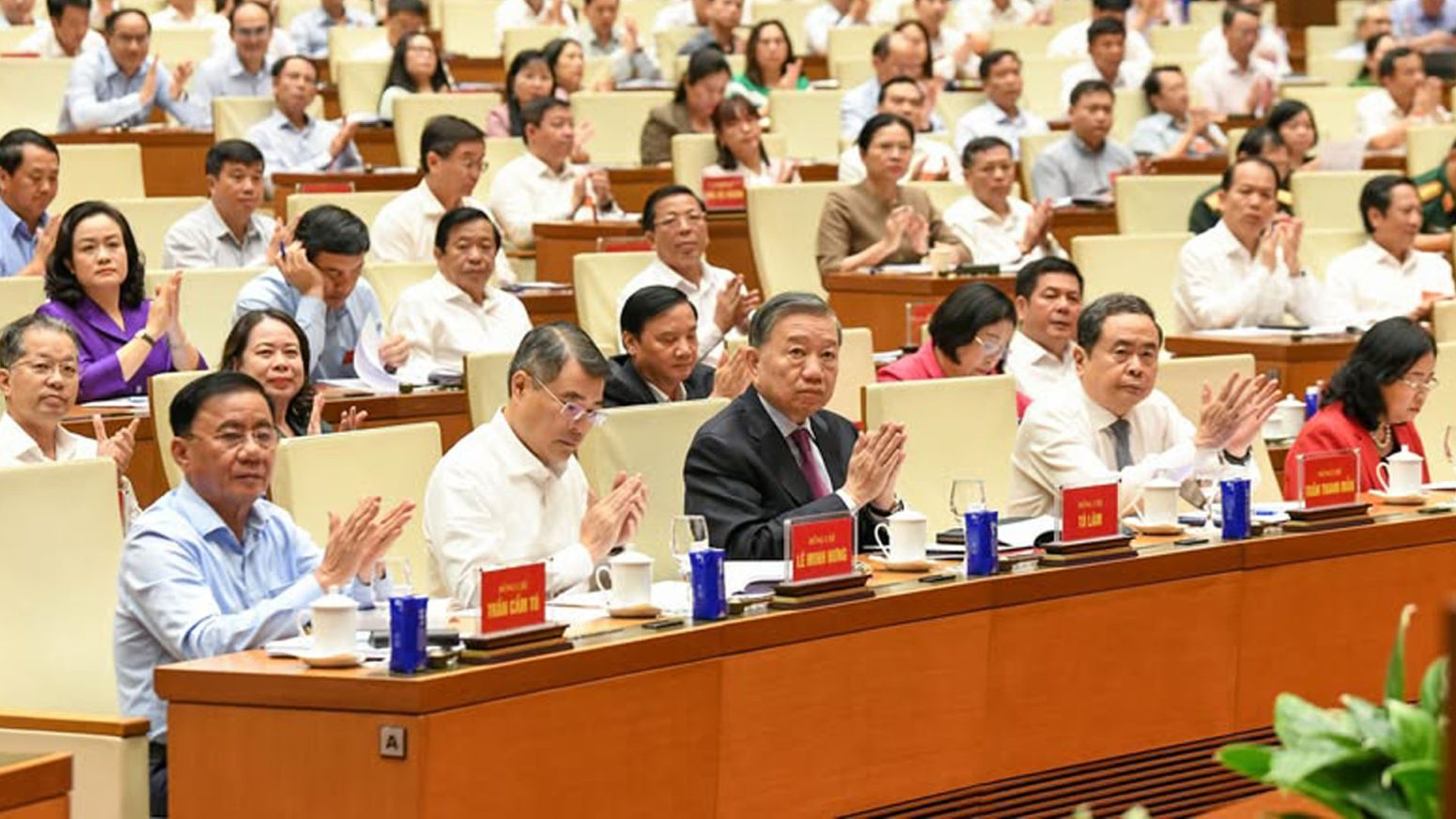

According to international observers, a segment of the public and analysts have drawn a metaphorical comparison between the current process of consolidating power and reform and the historical narrative of Hồ Quý Ly in the early 15th century.
An analysis by the U.S. Council on Foreign Relations suggests that this comparison reflects the public’s apprehension regarding the rapid pace of power consolidation currently taking place in Vietnam.
Accordingly, when looking back at the history of the Hồ dynasty through official historical records, Hồ Quý Ly’s swift defeat in the face of the Ming invasion in 1407 did not stem from a lack of reformist vision, but rather from his methods of seizing power and implementing policies that lacked social consensus.
Before ascending to the throne in 1400, Hồ Quý Ly employed harsh measures to eliminate opposing forces—such as forcing Emperor Trần Thuận Tông to commit suicide and executing more than 370 members of the Trần royal family—which created a deep moral rift.
Once he had seized full power, although he implemented many progressive policies—such as monetary reform and land-ownership limits—his hasty and coercive implementation, coupled with excessive exploitation of the people, plunged the populace into dire straits.
General Hồ Nguyên Trừng’s famous warning—that he was not afraid of fighting the enemy but feared the people’s lack of support—captured the tragedy of the Hồ dynasty’s failed reforms.
This is precisely why, when Ming troops invaded under the banner of “supporting the Tran and destroying the Ho,” it was Nguyen Dai—a general of the Ho dynasty himself—who guided the invaders, aided by the betrayal of a segment of the disgruntled populace in Nghe An and Ha Tinh, leading to the capture of Ho Quy Ly and his son at Ky La Bay and Cao Vong Mountain.
Placing this historical narrative alongside the current political landscape in Vietnam—marked by the departure of many high-ranking leaders of the Communist Party of Vietnam, such as Nguyễn Xuân Phúc, Võ Văn Thưởng, and Vương Đình Huệ…
—along with the aggressive pace of administrative reform, ranging from the merger of administrative units to the reduction of hundreds of thousands of civil service positions, which, while extensive, has proven ineffective.
Although the institutional context of a modern Vietnamese state is entirely different from that of an absolute monarchy, the comparisons mentioned above serve as practical warnings about governance risks.
While the Ba Dinh leadership emphasizes the urgency of streamlining the bureaucracy to unlock resources for economic development, a segment of public opinion and Western analysts express skepticism regarding transparency as well as the absence of checks and balances on power.
Meanwhile, the results of the confidence vote in the National Assembly in October 2018—when Minister of Public Security To Lam received as many as 51 low-confidence votes from the National Assembly—and the controversies surrounding the “gold-plated steak” dinner in London in 2021 have raised questions about ethical standards for top leaders.
In addition, the widespread reduction of personnel and merger of government agencies—which is considered unsuccessful—has created significant budgetary pressures, as well as the risk that public administrative services for citizens are becoming bogged down.
Public opinion holds that the greatest value of historical analysis lies in examining the relationship between the pace of reform and the resilience of society as a whole.
Regardless of the era, no reform—no matter how ambitious—can succeed without oversight mechanisms and genuine public consensus.
Trà My – Thoibao.de
=======
From Hồ Quý Ly’s Reforms to Tô Lâm’s Streamlining of the Bureaucracy: Warnings of Collapse?
“… Comparing Hồ Quý Ly’s reforms with Tô Lâm’s streamlining of the bureaucracy, drawing warnings regarding social consensus, systemic stability, and public support.”
#Vietnam #ChinhTruongVN #Thoibao